Oscar Wilde was born in Dublin in 1854 and became the sharpest voice in Victorian London. He worked as a playwright, novelist, poet, and critic, all at the same time.
He led the aesthetic movement and its idea that art needs no excuse beyond itself, a stance known as art for art's sake. The same man wrote the gothic dread of The Picture of Dorian Gray and the fairy tale that still makes children cry.
This page gathers 23 of his works as free PDFs, from an 8 page prize poem to a 229 page novel. Pick a genre below and start reading.
📚
Download every book on this page in one click
Sign in with Google and grab them all without going one by one.
We will redirect you to accounts.google.com to complete sign-in.
Email and name only · We never send spam
Access unlocked
Download every book on this page in one click
Get them all together, without going one by one.
Direct download · One ZIP file
Download started. Check your downloads folder for the ZIP.
Plays
Oscar Wilde Plays
Wilde wrote four society comedies plus the tragedies that came before he found his comic voice. Start with The Importance of Being Earnest, then read Salome for the shock.
Wilde's comic masterpiece, in which two men invent fictional identities to escape their obligations and nearly lose the women they love. Complete in three acts, with the full cast list and stage directions.
A young wife believes her husband is unfaithful and prepares to leave him, unaware of who the other woman really is. The complete four act comedy that launched Wilde's career in the theatre.
Wilde's one act tragedy of obsession and violence in Herod's court, written first in French and staged as a symbolist drama. Short, strange, and unlike anything else he wrote.
Wilde's first play, a drama of revolutionary conspiracy in imperial Russia. A prologue and four acts, rarely staged and worth reading for how different it is from his comedies.
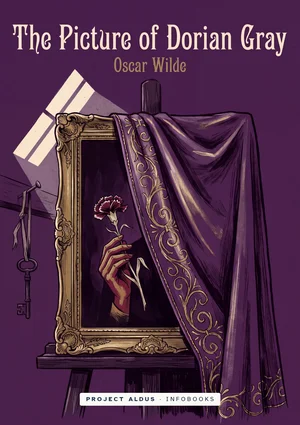
Wilde wrote exactly one novel, and it has never gone out of print. Around it sit The Canterville Ghost, a ghost story played for laughs, and the society crimes of Lord Arthur Savile's Crime and Other Stories.
An American family moves into an English country house and refuses to be frightened by the ghost who has haunted it for centuries. A ghost story played entirely for comedy.
Five stories, including a man told by a palm reader that he will commit murder and who decides to get it over with before his wedding. Also collects The Canterville Ghost and The Portrait of Mr. W. H.
A literary mystery about the identity of the young man in Shakespeare's sonnets, told as fiction. Wilde builds an elaborate theory and lets his narrators argue over whether it is true.
Wilde wrote these for his sons and they are still read to children today. The Happy Prince and Other Tales and A House of Pomegranates are the two collections he published.
Five fairy tales, including the gilded statue who gives away his jewels and the nightingale who dies for a rose. Written for children and read just as often by adults.
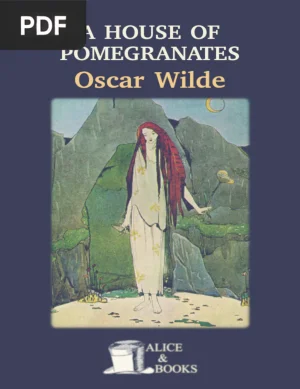
Four longer fairy tales, darker and more ornate than his first collection. Includes The Young King, The Birthday of the Infanta, The Fisherman and His Soul, and The Star-Child.
The poetry runs from the prize poem Wilde wrote at Oxford to The Ballad of Reading Gaol. He published that last one under his prison cell number instead of his name.
The long poem Wilde wrote after his release from prison, about a man hanged for murder and about everyone who watches it happen. Published under his cell number rather than his name.
The poem that won Wilde the Newdigate Prize at Oxford in 1878, written after a visit to the Italian city. Eight pages, and the first thing he published to real acclaim.
This is Wilde arguing rather than entertaining. Intentions holds his aesthetic theory, The Soul of Man Under Socialism holds his politics, and De Profundis is the letter he wrote from his cell.
Four critical essays, including The Decay of Lying and The Critic as Artist, where Wilde sets out the case that art owes nothing to nature or morality. This is where the aesthetic theory lives.
Wilde's political essay, arguing that socialism matters because it would free people to become individuals rather than workers. Short, provocative, and still argued over.
Wilde's account of the lecture tour he made across America in 1882, from mining towns to lecture halls. Sharp, funny, and full of the one liners he was already famous for.
Wilde's life ended far from the drawing rooms he satirised. In 1895 he was convicted of gross indecency and served two years of hard labour at Reading Gaol, where he wrote the long letter published as De Profundis.
He died in Paris in 1900, and the work outlived the scandal. Every one of these 1,569 pages is in the public domain, and you can find more writers like him in our classic authors collection.