Tao Te Ching by Lao Tzu [PDF]
by InfoBooks
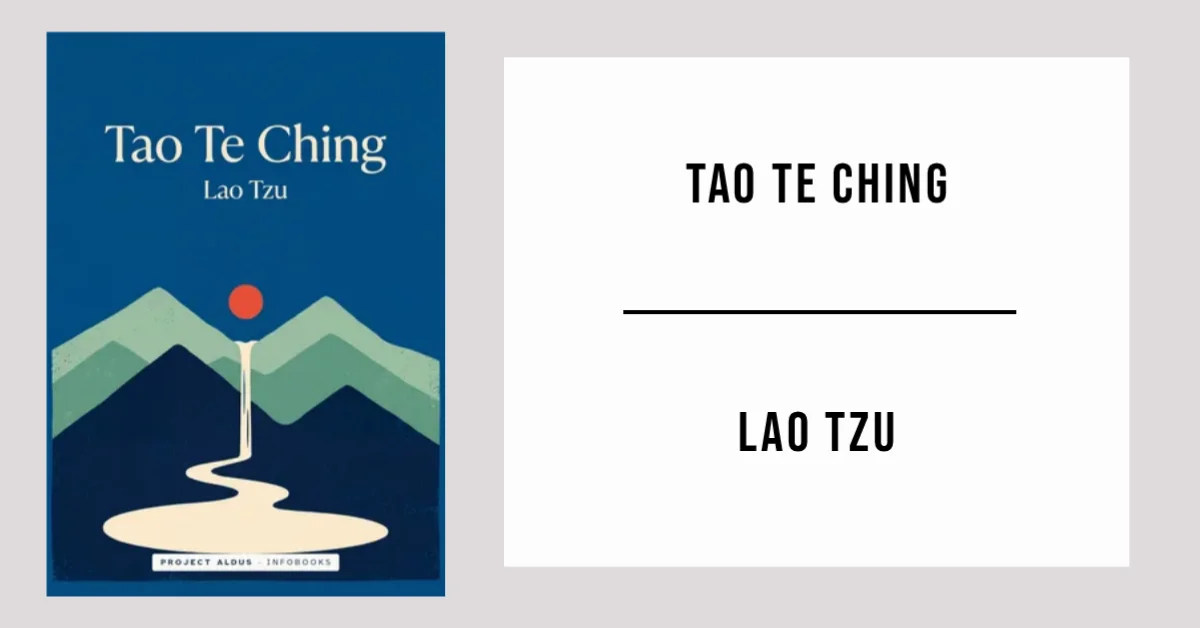
The Tao Te Ching opens by warning you that the Way it describes cannot be put into words. Then it tries anyway in 81 short chapters, and in Chapter 56 adds that whoever knows the Tao does not speak about it.
This version of Tao Te Ching in PDF is our own edition from Project Aldus: James Legge's complete translation, set so you can open it at any chapter and come back to a line you want to read again.
The download is free and needs no sign-up. One click and the whole book is yours to start reading.
Tao Te Ching by Lao Tzu
*Please wait a few seconds for the document to load, the time may vary depending on your internet connection. If you prefer, you can download the file by clicking the link below.
Loading PDF...
Download PDF
Verified PDF · Secure download
Information: Tao Te Ching
- Author: Lao Tzu
- Publication Date: 400 BC
- Main Characters:
- The Tao: The nameless Way behind all things. It cannot be grasped by words, yet it gives rise to everything and asks for nothing in return.
- The Sage: The ideal person of the text. The Sage leads without forcing, teaches without lecturing, and stays humble so that others can flourish.
- Lao Tzu: The legendary author, said to be a keeper of archives at the Zhou court. Tradition holds that he wrote the 81 chapters just before leaving China forever.
- Yin Xi: The gatekeeper of the western pass. According to legend, he refused to let Lao Tzu leave until the old master put his wisdom in writing.
- Wu Wei: Effortless action, or acting without struggle. It is the practical heart of the book: doing what is needed, then stepping back.
- Brief Summary: The Tao Te Ching is a collection of 81 brief chapters that describe the Tao, the nameless source and pattern of everything. The first part focuses on the Way itself, which cannot be fully named or explained. The second part turns to Te, the virtue or inner power that grows when a person lives in harmony with the Way. Through images of water, valleys, infants, and uncarved wood, Lao Tzu argues that softness overcomes hardness and that the wisest rulers govern least. The text closes with advice on simplicity, contentment, and acting without seeking credit.
- Thematic Analysis: The central theme is wu wei, or effortless action: achieving results by working with the natural flow of things rather than against it. The book also explores the power of humility, the value of emptiness, and the paradox that yielding often wins. Its political chapters warn against excessive laws, war, and ambition, favoring a light and modest style of leadership.
- Historical Context: The Tao Te Ching is traditionally dated to around the 6th century BC, though most scholars place its current form in the 4th century BC, during China's turbulent Warring States period. Legend says Lao Tzu, a court archivist of the declining Zhou dynasty, wrote it at the request of the gatekeeper Yin Xi before vanishing to the west. This edition uses James Legge's English translation, published in 1891 in the Sacred Books of the East series.