Looking for stoicism books? We've gathered 15 free stoicism books in PDF, covering classic Stoic texts, philosophy essays, and practical handbooks on Stoic ethics, resilience and daily practice.
These are the writings that shaped Western philosophy for over two thousand years. From Marcus Aurelius reflecting during military campaigns to Epictetus teaching freedom as a formerly enslaved man in ancient Rome.
Browse by topic or pick any title that catches your eye. Every book is free to read online or download as PDF.
Stoicism Books
Stoicism Books
The core texts of Stoic philosophy come from three thinkers: Marcus Aurelius, Epictetus and Seneca. Their writings span centuries of Roman history and remain the foundation of Stoic thought. Epictetus never wrote anything himself. His student Arrian recorded his teachings, giving us the Discourses and the Encheiridion.
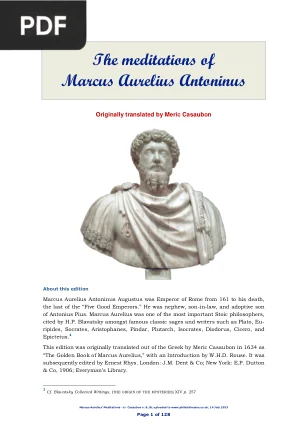
The private reflections of Rome's philosopher-emperor, written during military campaigns. Twelve books of meditations on duty, virtue, mortality and inner peace that remain the most widely read Stoic text in the world.
The foundational teachings of Epictetus, one of Stoicism's most influential voices. Includes both the Discourses and the Encheiridion (Handbook), translated by George Long from Project Gutenberg.
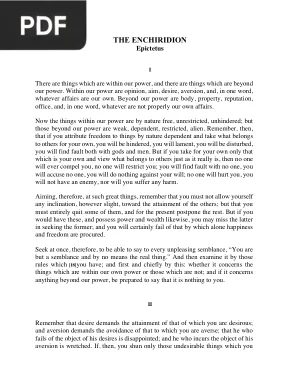
The essential handbook of Stoic practice. A compact manual distilling Epictetus' teachings into actionable principles on what is within our control, how to face adversity, and how to live with inner freedom.
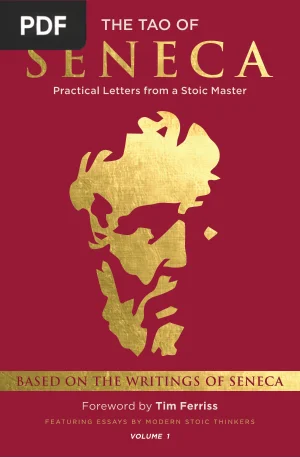
Seneca's Moral Letters to Lucilius, covering topics from the fear of death to friendship, philosophy, and the good life. This beautifully designed free edition includes essays by modern Stoic thinkers between the letters.
A comprehensive overview of Stoic philosophy from its origins to modern applications. Covers the Early Stoa, Roman Stoics including Seneca and Marcus Aurelius, and practical themes like feelings, happiness, and cosmopolitanism.
A classic introduction to Stoic doctrine covering its origins among the Greeks and Romans, its relationship to Socrates and Plato, and the core tenets of Stoic philosophy. Written by an Oxford scholar.
These academic works explore the deeper structure of Stoic thinking. From ethics and happiness to the origins of the school Zeno of Citium founded in ancient Greece.
A collection of essays by leading international scholars tracing how Stoic ideas influenced Western thought from late antiquity through the medieval and modern periods. Covers topics from Socratic imprints on Epictetus to Stoic voluntariness of passions.
A Cornell University PhD dissertation exploring the foundational commitments of Stoic ethics. Examines the doctrines of oikeiosis and preferred indifferents, and distinguishes Stoic practical reason from Humean and Kantian conceptions.
An interdisciplinary thesis connecting ancient Stoic philosophy with the pursuit of happiness in modern life. Argues that practicing Stoic principles and enkrasia (self-control through reason) can enhance personal well-being.
A scholarly comparison of how Stoicism and Christianity approach happiness. Explores the Stoic doctrine that virtue alone produces happiness versus the Aristotelian view that external goods also matter.
An analysis of Pierre Hadot's influential reading of Stoicism as a lived philosophy rather than abstract theory. Examines Hadot's interpretation of Epictetus' three disciplines and Marcus Aurelius' Meditations.
A concise overview of Stoicism's philosophical roots and lasting influence on Western thought. Traces key tenets from the Old Stoa through the Roman period, covering psychology, epistemology, cosmology, and ethics.
Explores the overlooked aesthetic dimension of Stoic philosophy. Traces a direct line from Plato through the Stoics to Kant, arguing that Stoic ideas about beauty and moral harmony shaped modern aesthetic theory.
A hands-on guide to applying Stoic philosophy in daily life. Organized as short, actionable exercises covering morning routines, decision-making, dealing with difficult people, and building resilience.
A structured introduction covering Stoicism's origins with Zeno, the three pillars of Stoic thought, key philosophers (Seneca, Epictetus, Marcus Aurelius), and practical steps for applying Stoic principles today.
A seven-day guided program for living like a Stoic. Each day focuses on a core theme (life, control, mindfulness, virtue, relationships, resilience, nature) with morning meditations, exercises, and evening reflections.
That covers our collection of free stoicism books in PDF. Whether you prefer classic texts or modern guides, these resources will help you build a more resilient and focused mindset.