Science fiction books are older than rockets. Lucian sent a ship to the Moon in the second century, and Mary Shelley wrote Frankenstein, often called the first science fiction novel, in 1818.
Here you'll find the whole family tree of the genre. It runs from early utopias and H. G. Wells's Martians to Jules Verne's voyages and the pulp magazines that gave science fiction its name.
Each section collects the key works of one branch. Pick a starting point and download any PDF for free, with no sign-up needed.
📚
Download every Science Fiction book on this page
All the books on this page in one ZIP file, instead of downloading them one by one.
We will redirect you to accounts.google.com to complete sign-in.
Email and name only · We never send spam
Access unlocked
Download every Science Fiction book on this page
All the books on this page in one ZIP file, instead of downloading them one by one.
Direct download · One ZIP file
Download started. Check your downloads folder for the ZIP.
Origins
Early Science Fiction Books
Before the genre had a name, writers were already sending travelers to the Moon and building cities run by science. These early science fiction books run from Lucian's second-century voyage to Frankenstein.
Written in the second century, this tale sends a ship to the Moon, where its crew lands in the middle of a war between the kings of the Moon and the Sun. The 1894 English edition, with the illustrations by Aubrey Beardsley, William Strang and J. B. Clark.
A sea captain describes a walled city ruled by philosophers, where knowledge is painted on the walls and science organizes daily life. Campanella wrote this utopia in 1602, from a prison cell.
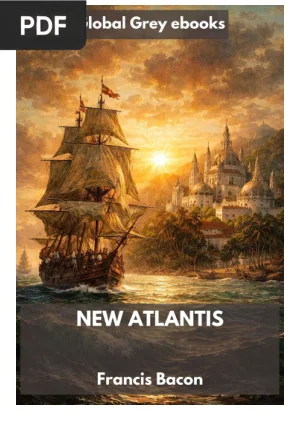
Sailors lost in the Pacific reach Bensalem, an island run by a college of scientists who study nature to improve human life. Bacon's unfinished fable of 1627 imagined the modern research institute.
A Spanish adventurer harnesses a flock of wild swans and is carried all the way to the Moon, where he finds a peaceful society of giants. First published in 1638, it is one of the earliest space voyages in English.
Cyrano straps bottles of dew to his body to reach the sky and ends up on the Moon, debating philosophy with its inhabitants. A witty 1657 satire that mixes space travel with free thinking.
A young woman crosses into another world through the North Pole and becomes empress of a land of talking animals and scientific societies. Published in 1666, it is one of the first works of fiction written by a woman scientist.
Lemuel Gulliver sails to the land of tiny Lilliputians, a kingdom of giants, a flying island and a country ruled by horses. The voyage to Laputa, with its absurd scientists, is a founding text of satirical science fiction.
Letters sent back from the year 1998 reveal the politics of a future Britain. Madden's 1733 novel is the first known story set in the future, here transcribed in full with notes and a closing essay by artist Liam Gillick.
Niels Klim falls through a hole in a Norwegian mountain and lands on a small planet inside the hollow Earth, home to wise talking trees. A 1741 satire of European customs in the tradition of Gulliver.
A giant from the star Sirius and his companion from Saturn land on Earth and are stunned by the pride of its tiny inhabitants. Voltaire's 1752 tale is one of the first works of science fiction and a short lesson in humility.
Victor Frankenstein builds a living being from dead matter and then abandons it, with tragic results for both. Our own Project Aldus edition of the 1818 novel often called the first true work of science fiction.
In 1926, Hugo Gernsback launched Amazing Stories, the first magazine devoted entirely to science fiction. Read complete pulp issues with their original covers, including the debut of Buck Rogers and the first Astounding.
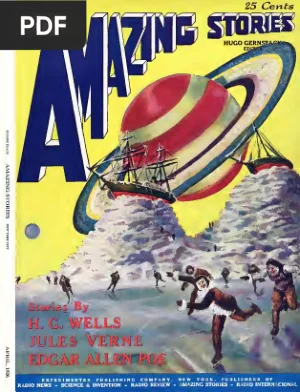
The first issue of the first magazine devoted entirely to science fiction, with Frank R. Paul's famous cover. Inside are stories by H. G. Wells, Jules Verne and Edgar Allan Poe, plus Gernsback's opening editorial.
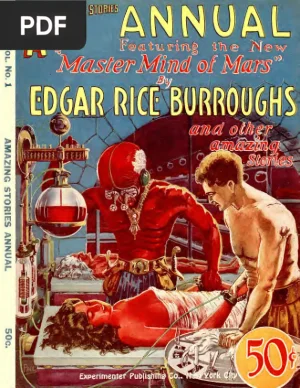
The only Amazing Stories Annual ever printed, led by The Master Mind of Mars, a complete Barsoom novel by Edgar Rice Burroughs. It also brings A. Merritt's The Face in the Abyss and a story by H. G. Wells.
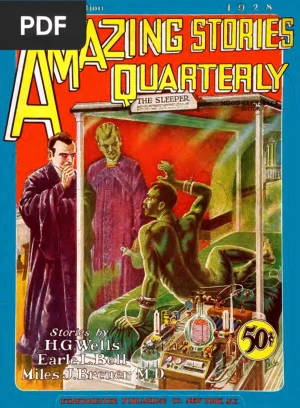
The first issue of the quarterly companion to Amazing Stories, built around the complete text of H. G. Wells's When the Sleeper Wakes. Full issue with the original color cover and pulp illustrations.
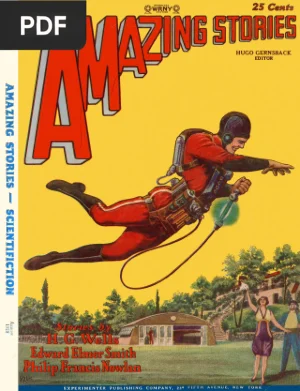
One of the most famous issues in the genre: it introduced Buck Rogers in Armageddon 2419 A.D. by Philip Francis Nowlan and began The Skylark of Space by E. E. Smith, the first space opera.
The first issue of the magazine Gernsback launched after losing Amazing Stories, with stories by David H. Keller, Fletcher Pratt and H. G. Wells. Gernsback would soon coin the term science fiction in its pages.
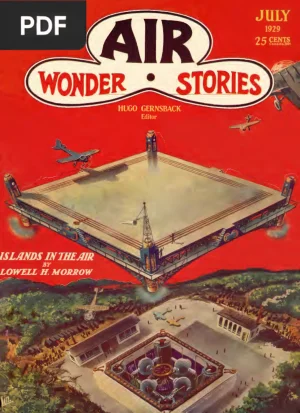
The first issue of a pulp devoted to the future of flight, from airships to rocket planes, with a cover by Frank R. Paul. Includes Islands in the Air by Lowell Howard Morrow.
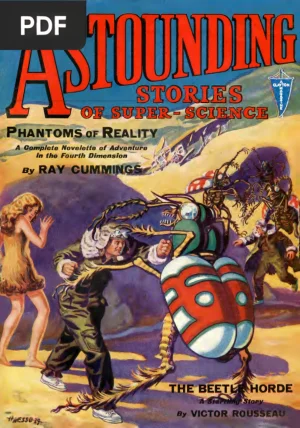
The first issue of Astounding Stories of Super-Science, the magazine that would later become Analog. Features Ray Cummings, Victor Rousseau and Captain S. P. Meek, with an insect invasion on the cover.
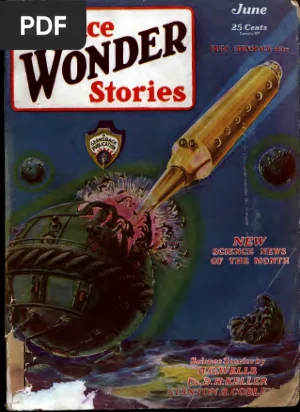
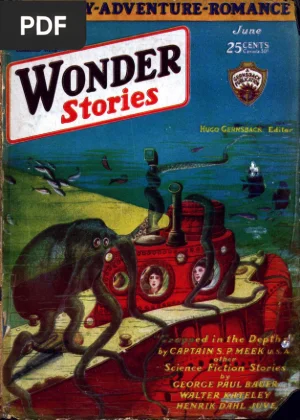
The first issue after Science Wonder and Air Wonder merged into a single magazine, with stories by Captain S. P. Meek, Raymond A. Palmer and George Paul Bauer under a Frank R. Paul cover.
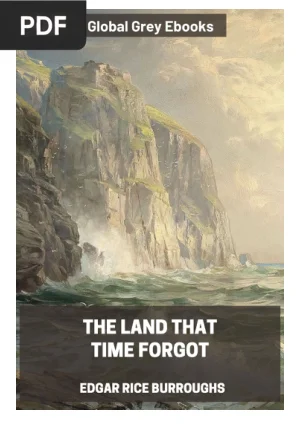
Edgar Rice Burroughs sends John Carter to Mars and a U-boat to a lost island full of dinosaurs. His pulp adventures are a fun way into classic science fiction novels.
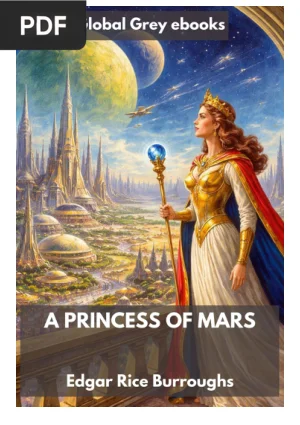
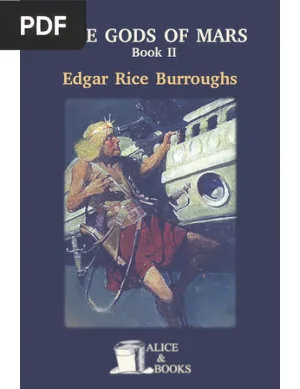
John Carter wakes up on Mars, where he can leap like a giant, fights four-armed warriors and falls for a princess. Pure action and the book that inspired Star Wars and Superman.
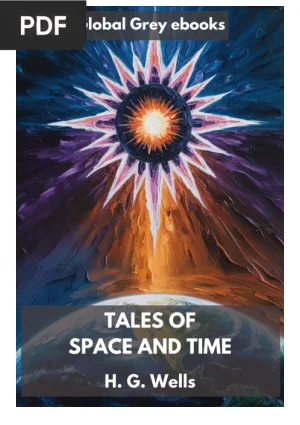
Three long stories and two short ones, ranging from the stone age to a future city of thirty million people. Includes A Story of the Days To Come, the closest Wells came to writing cyberpunk.
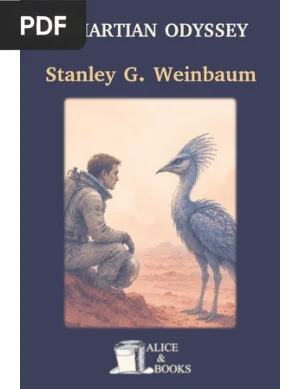
An astronaut stranded on Mars crosses the desert with Tweel, a birdlike alien who thinks in ways no human can follow. Published in 1934, it gave science fiction its first truly alien alien.
A student in Padua falls for the daughter of a scientist who has raised her among poisonous plants until she became poisonous herself. Hawthorne's 1844 story is an early warning about science without conscience.
Set in a glass city where citizens are numbers and privacy is a crime, this is the novel that gave the genre its shape. Zamyatin wrote it in 1921 and almost every dystopia since borrows from it.
A plague sweeps the world in the late 21st century and the narrator watches civilisation empty out around him. Shelley wrote the first great novel about the end of humanity.
London imagines an American oligarchy that crushes a workers' movement and rules for centuries. Written in 1908, it is one of the first novels to treat concentrated economic power as a political regime.
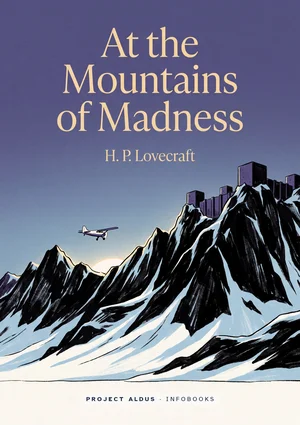
A scientific expedition to Antarctica uncovers a vast city built by beings that ruled the Earth long before humans. Our own Project Aldus edition of Lovecraft's most ambitious novella.
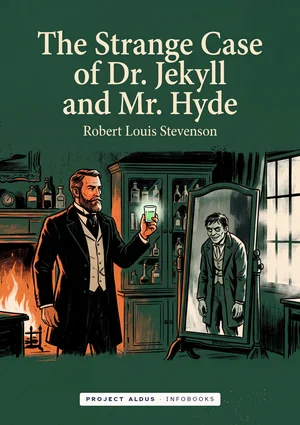
A respected London doctor drinks a potion that releases his darkest self, and soon cannot control the change. Our own Project Aldus edition of Stevenson's classic tale of science and the double.
A meteorite lands on a remote farm and leaves behind a color no human eye has seen, one that slowly poisons the land and the family living on it. Lovecraft's favorite of his own stories.
Martian cylinders land outside London and machines armed with heat rays begin to destroy everything in their path. The 1898 novel that defined the alien invasion story.
A shipwrecked man is left on an island where a banished surgeon turns animals into half-human creatures. A dark story about science, pain and what makes us human.
A gun club with nothing left to shoot at decides to fire a manned projectile at the Moon, and the sequel follows the capsule the whole way there. Verne worked out the launch site, the escape velocity and the crew size decades before any space agency existed.
Captain Nemo, the Nautilus and a voyage through every ocean on the planet, told by a naturalist who is half prisoner and half guest. The most famous thing Verne wrote and still the best place to start.
A coded manuscript sends a professor, his nephew and an Icelandic guide down a volcano and into a world of underground oceans and living fossils. The purest expression of what Verne did better than anyone.
Send this page to someone who’d love to read it. Everything is free, no sign-up needed.
Esc
Start typing to search...
Searching...
No results found
Try different search terms
Your book is downloading!
If InfoBooks helped you, you can support us in one click: add us as a preferred source on Google. You'll see more of our books when you search, and you'll help us keep sharing free reading with everyone.
Done! Your book is downloading
Know someone who’d enjoy reading it? Send them this page. It’s free, no sign-up needed, and you help us spread the love of reading.