Dystopian fiction imagines societies that look orderly and turn out to run on surveillance, control and fear. This page collects free dystopian novels in PDF, from the books that invented the genre to the utopias that quietly became warnings.
Yevgeny Zamyatin wrote the blueprint for the genre in 1921, and almost every dystopia since owes it something. You will find his work here alongside Jack London's American oligarchy, Kafka's courts that explain nothing, and H. G. Wells's engineered future societies.
Every book here is free to read online or download, with no account and no waiting list. Pick the one that unsettles you most and start there.
📚
Download every dystopian novel on this page
All the books on this page in one ZIP file, instead of downloading them one by one.
We will redirect you to accounts.google.com to complete sign-in.
Email and name only · We never send spam
Access unlocked
Download every dystopian novel on this page
All the books on this page in one ZIP file, instead of downloading them one by one.
Direct download · One ZIP file
Download started. Check your downloads folder for the ZIP.
Classics
Classic Dystopian Novels
These are the novels that defined what a dystopia looks like. Written between the 1890s and the 1930s, they are still the reference every later dystopia is measured against.
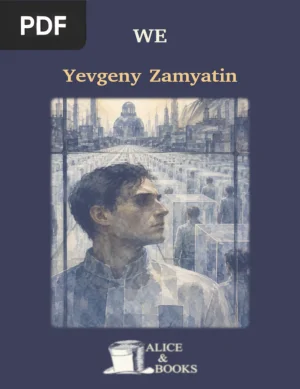
Set in a glass city where citizens are numbers and privacy is a crime, this is the novel that gave the genre its shape. Zamyatin wrote it in 1921 and almost every dystopia since borrows from it.
Josef K. is arrested one morning and never told what he is accused of. Kafka turns a legal system nobody can explain into a portrait of power that answers to no one.
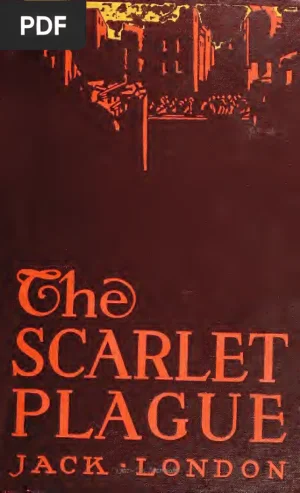
London imagines an American oligarchy that crushes a workers' movement and rules for centuries. Written in 1908, it is one of the first novels to treat concentrated economic power as a political regime.
Bernard Marx lives in a World State that has engineered away pain, family and choice, conditioning every citizen to love the role assigned to them. Huxley's 1932 novel is still the sharpest account of a dystopia that controls people through pleasure rather than fear.
In a collectivist future the word for a single self has been erased from the language. A short, stark novella about a man who rediscovers the idea of the individual.
Humanity lives underground in isolated cells, served by a Machine that supplies everything and is worshipped like a god. Forster published it in 1909 and anticipated screen-mediated life with unsettling accuracy.
A man sleeps for two centuries and wakes as the wealthiest person alive, in a London of vast towers where the poor labour for a ruling council. Wells builds one of the earliest visions of the corporate megacity.
Wells describes atomic bombs three decades before they existed, then follows the collapse and rebuilding of world order after they are used. A novel about technology outrunning the politics meant to control it.
A visitor to the New York of 1988 finds a city of glittering wealth built on a desperate underclass, and watches the revolt that follows. One of the most influential political dystopias of the 19th century.
Two travellers reach the Moon and find the Selenites, a society where every individual is physically shaped from birth to fit a single job. The satire of a perfectly specialised civilisation outlasts the adventure.
The book that named the genre. More describes an island commonwealth with no private property and uses it to hold a mirror to the Europe of his own day.
A sleeper wakes in the year 2000 to find poverty and inequality abolished. Bellamy's vision of a cooperative future became a bestseller and shaped reform movements for decades.
Three explorers stumble on a society of women that has run without men for two thousand years. Gilman uses their confusion to test how much of what we call human nature is only convention.
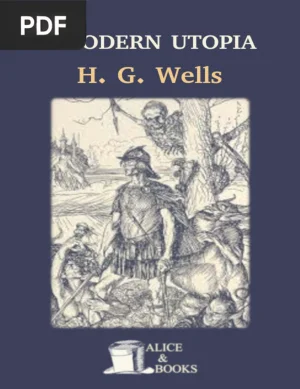
Wells argues that a workable utopia must be planned, global and open to revision, then narrates one. Part novel and part political essay, it is his fullest statement on how a better society might be organised.
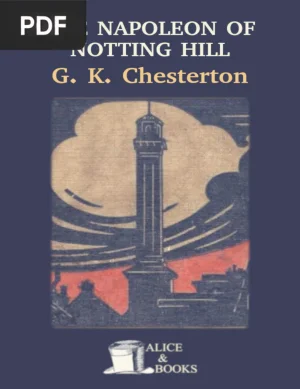
In a bureaucratic London of 1984 where nothing surprising happens anymore, a joke of a king revives medieval pageantry and one neighbourhood takes it seriously. A comic anti-utopia about the value of the local.
The state has already collapsed in these stories. What is left is a handful of survivors deciding what to rebuild, and whether it should look anything like what came before.
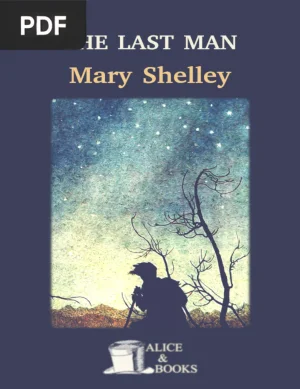
A plague sweeps the world in the late 21st century and the narrator watches civilisation empty out around him. Shelley wrote the first great novel about the end of humanity.
England has reverted to forest and marsh, the capital is a poisoned swamp, and a young man sets out across the wilderness that replaced it. An early and vivid picture of nature reclaiming an industrial society.
Sixty years after a pandemic wiped out nearly everyone, an old survivor tries to explain the vanished world to grandchildren who barely believe him. A short, bleak study of how fast knowledge disappears.
A traveller returns from the Arctic to find every person on Earth dead, and wanders the empty continents alone. One of the strangest and most vivid last man stories ever written.
Professor Challenger predicts that Earth is about to pass through a belt of poisonous ether and gathers his friends to watch the end. Doyle turns a global catastrophe into a tight, unsettling short novel.