Hydraulic engineering is the science of putting water to work in channels, pipes, dams, rivers and coastlines. Here you'll find 31 free hydraulic engineering books in PDF, from first-year textbooks to the design manuals engineers use on real projects.
Every book comes from a university, an open access publisher or a public agency that builds and runs water infrastructure. You'll learn open channel flow, dam and spillway design, river and coastal engineering, hydrology and the numerical models behind modern flood studies.
Read any book online or download it free, with no registration. If you're new to the subject, start with the textbooks, which lay the groundwork for the rest.
📚
Download every Hydraulic Engineering book on this page
All the books on this page in one ZIP file, instead of downloading them one by one.
We will redirect you to accounts.google.com to complete sign-in.
Email and name only · We never send spam
Access unlocked
Download every Hydraulic Engineering book on this page
All the books on this page in one ZIP file, instead of downloading them one by one.
Direct download · One ZIP file
Download started. Check your downloads folder for the ZIP.
Textbooks
Hydraulic Engineering Textbooks
These hydraulic engineering textbooks teach the subject from the ground up. You'll work through pressure, energy and pipe flow, with plenty of solved problems to check your progress.
University lecture course that builds hydraulics from the ground up: fluid properties, hydrostatics, pipe flow, open channels and flow measurement. It explains each approximation engineers make, so you understand the method and not just the formula.
A complete hydraulics course for civil engineers, from hydrostatics and pipe networks to open channels, groundwater and hydraulic structures. Each chapter pairs the theory with lab experiments and open source code you can run yourself.
One hundred essential hydraulic engineering problems, each one fully solved in both SI and English units. Covers pipes, open channels, pumps, irrigation and drainage, and works as a quick reference for exams and real projects.
Rivers, canals and roadside drains all follow the same rules of free surface flow. These open channel hydraulics books cover critical depth, hydraulic jumps and how to design a channel that works.
A clear introduction to open channel flow as it applies to roads: energy, critical depth, hydraulic jumps, channel design, culverts and storm drains. Worked examples in both SI and English units make it a solid first manual on the subject.
Lecture notes on free surface flow by one of the leading teachers of hydraulics. Covers resistance to flow, energy and momentum, critical flow, hydraulic jumps and gradually varied flow, always explaining where each equation comes from.
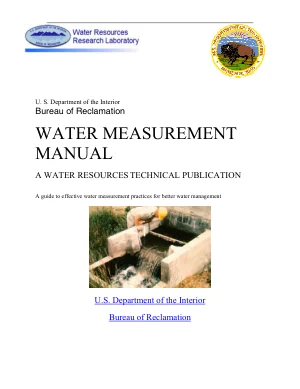
The classic field guide to measuring flow in canals and channels: weirs, flumes, orifices, current meters and gates. Includes rating tables, installation details and the maintenance tips that keep a measuring structure accurate.
Design procedures for the structures that tame fast water at culvert outlets and in steep channels: scour holes, riprap aprons, drop structures and stilling basins. Every method comes with design charts and step by step examples.
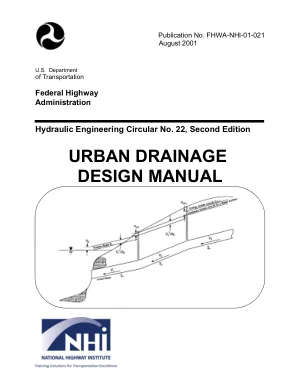
The full method for designing roadway drainage, from rainfall and runoff through gutters, inlets, storm drains, culverts and detention. Dense with design charts, worked examples and the equations behind them.
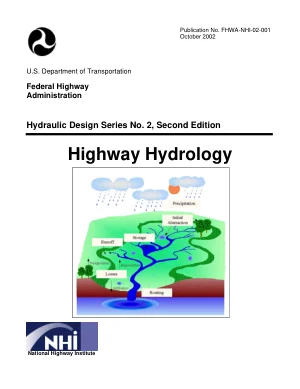
A complete design manual for the water side of road projects: hydrology, open channel design, culverts, bridge hydraulics, storm drains and fish passage. Up to date, practical and full of the criteria engineers apply on real jobs.
Dams, spillways, stilling basins and culverts are where hydraulic engineering meets concrete. Several of these design manuals come straight from the US agencies that build them.
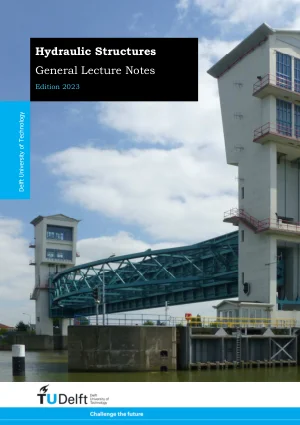
University course notes on how to design hydraulic structures such as locks, weirs, storm surge barriers and quay walls. They walk through the full design process, from loads and functional requirements to the choice of a structural concept.
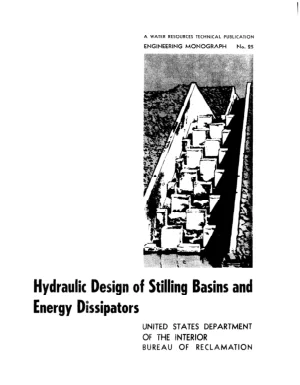
The reference on stilling basins below dams and spillways, based on years of laboratory tests. It presents the standard basin types still used in design today, with the curves and dimensions needed to size them.
Engineering manual for designing dam spillways: ogee crests, gated and ungated flow, chutes, cavitation risk and energy dissipation. Built on decades of model studies and full of design charts.
Everything needed to design a culvert: inlet and outlet control, nomographs, improved inlets, fish passage and erosion protection. The standard design manual for one of the most common hydraulic structures.
A collection of recent research on hydraulic structures and hydrodynamics, from dam safety and spillway flows to sediment and reservoir operation. A good way to see the problems engineers are working on today.
Short edited volume on hydraulic structures for water management: operation and maintenance, bottom outlets for embankment dams, streamflow measurement and the geotechnics of earth and rockfill dams.
A river moves water and sediment at the same time, and it keeps changing its course. These books show how engineers read that change and protect banks and bridges from scour.
How rivers move and change, and how to read those changes in the field: channel classification, lateral migration, degradation and aggradation. Includes a step by step method to assess stream stability around bridges and roads.
A practical guide to protecting riverbanks and bridge foundations: riprap, spurs, guide banks, check dams and bendway weirs, with real case histories. Helps you pick the right countermeasure for each type of river problem.
A complete manual on sediment in rivers and reservoirs: erosion, sediment transport, river morphology, reservoir sedimentation and numerical models. Written by the engineers who manage some of the largest dams in the world.
Before you size a channel or a dam, you need to know how much water is coming. These hydrology books answer that question, from rainfall and runoff to groundwater.
A modern introduction to hydrology that follows water through precipitation, snow, soils, groundwater and rivers, and shows how land use and climate change affect it. Clear figures and real case studies connect the science to water management.
Engineering hydrology explained step by step: rainfall analysis, flood frequency, the rational method, unit hydrographs and flood routing. Written to answer one question well, how much water a structure has to carry.
University course notes on hydrology for engineering students, covering the water cycle, precipitation, river basins, runoff and flood analysis. Each topic includes formulas, graphs and worked examples.
Sérgio António Neves Lousada, Rafael Freitas Camacho and Adhonys Alexander Rincón Rodrigues
Course notes on hydrology at the scale of a watershed: precipitation, infiltration, runoff, hydrographs and the measurement of streamflow. Short lessons with diagrams, ideal for a first pass through the subject.
Waves, tides and currents shape every coastline and every port. These coastal engineering books come from TU Delft and cover beaches, harbors and nature based coastal defense.
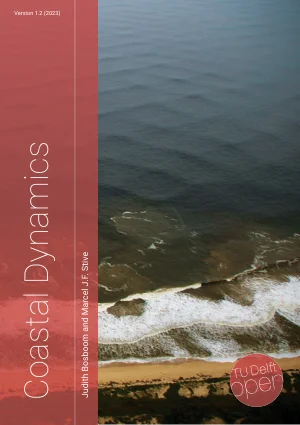
The open textbook on how coasts work: waves, tides, currents and sediment transport, and how they shape beaches, dunes, deltas and tidal inlets. Full color figures and exercises make it one of the best free books in coastal engineering.
How to plan and design ports and inland waterways, from ship traffic and channel dimensions to breakwaters, locks and quay walls. Built around real projects and the balance between capacity, safety and sustainability.
Mark van Koningsveld, Henk Verheij, Poonam Taneja and Huib de Vriend
A classic textbook on port planning and design: approach channels, harbor basins, breakwaters, berths and terminals for containers, bulk and liquids. Clear diagrams show how each part of a port is sized.
Principles for designing nature based solutions on coasts and rivers, where dunes, marshes and sediment do part of the work of dikes and seawalls. Richly illustrated with projects that show how engineering and ecology can work together.
Most hydraulic engineering projects today are tested on a computer first. These books explain the shallow water equations and the models, like HEC-RAS and EPANET, that engineers rely on.
An introduction to the numerical methods behind hydraulic models: finite differences, finite volumes and the solution of the shallow water equations in one and two dimensions. Explains how the models used in flood studies are built and where their limits are.
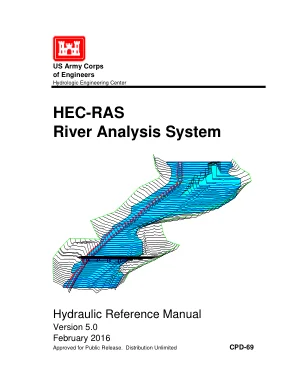
The theory behind HEC-RAS, the most widely used river modeling software: steady and unsteady flow, bridges, culverts, weirs, sediment transport and 2D modeling. Essential reading to understand what the program calculates.
Research collection on the shallow water equations and their use in hydraulics: numerical schemes, dam break flows, flood inundation and sediment transport. A look at the methods inside today's flood models.
Recent studies that combine hydraulic engineering with hydrological models, from reservoir operation and river flows to flood forecasting. Shows how modeling is used to answer real questions about water infrastructure.
The manual of EPANET, the free program used worldwide to model water distribution networks. Explains how to build a network, run hydraulic and water quality simulations and read the results, plus the equations the program solves.
The reference on how SWMM, the standard urban stormwater model, turns rainfall into runoff: infiltration, snowmelt, groundwater and evaporation. Each process is explained with its equations and the parameters you need to set.
Send this page to someone who’d love to read it. Everything is free, no sign-up needed.
Esc
Start typing to search...
Searching...
We couldn't find anything
Your book is downloading!
If InfoBooks helped you, you can support us in one click: add us as a preferred source on Google. You'll see more of our books when you search, and you'll help us keep sharing free reading with everyone.
Done! Your book is downloading
Know someone who’d enjoy reading it? Send them this page. It’s free, no sign-up needed, and you help us spread the love of reading.