Constitutional law books explain who holds power in a country, how far that power reaches, and which rights no government can take away. These free textbooks and casebooks help law students follow it from the first lecture to the hardest debates.
Start with the basics of separation of powers, federalism and judicial review, then move on to how the Supreme Court reads the U.S. Constitution. Other books cover the First Amendment, due process and constitutions from around the world.
Many of these titles are open access course texts written by law professors and judges. You can read every one online or download it for free.
📚
Download every Constitutional Law book on this page
All the books on this page in one ZIP file, instead of downloading them one by one.
We will redirect you to accounts.google.com to complete sign-in.
Email and name only · We never send spam
Access unlocked
Download every Constitutional Law book on this page
All the books on this page in one ZIP file, instead of downloading them one by one.
Direct download · One ZIP file
Download started. Check your downloads folder for the ZIP.
Textbooks
Constitutional Law Textbooks
Start here if you are new to constitutional law. These textbooks explain what a constitution is, how it organizes power and how courts keep it in check.
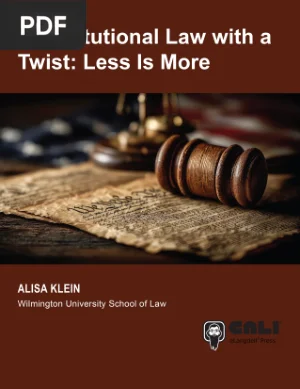
A streamlined casebook that covers the core of a first constitutional law course, from judicial review, federalism and separation of powers to due process, equal protection and fundamental rights. Short case excerpts and clear notes keep the focus on what you need to learn.
A full university course text on the foundations of constitutional law: the state, sovereignty, constitutionalism, the rule of law, types of constitutions and forms of government. It uses the Ethiopian constitution as a running case study.
A self-study course module that explains the scope and sources of constitutional law, federalism, separation of powers, the rule of law and constitutional supremacy. It closes with the constitutional development of Nigeria from colonial rule to independence.
A clear primer on what constitutions do, what they usually contain and why they matter for democratic government. A good first read before tackling a full textbook.
A short lecture by a senior appellate judge on what the rule of law means and how it shapes constitutional interpretation, drawing on the Australian Constitution and leading common law thinkers.
The U.S. Constitution is the oldest written national constitution still in force. These American constitutional law books trace how the Supreme Court gave its clauses meaning, from judicial review to national power.
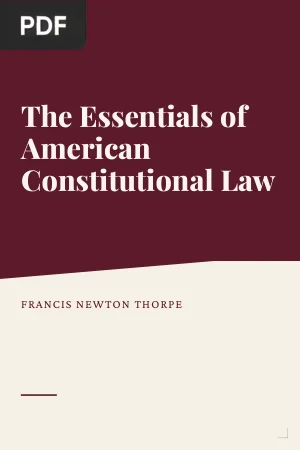
A classic guide to the U.S. Constitution, clause by clause, with the leading Supreme Court decisions that gave each provision its meaning. It remains a clear introduction to how American constitutional law was built.
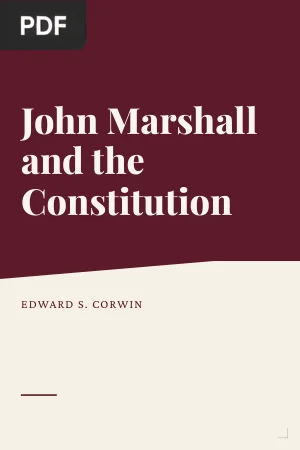
The story of how Chief Justice John Marshall turned the Supreme Court into a powerful branch of government, from Marbury v. Madison and judicial review to McCulloch v. Maryland and national power.
One of the most debated books in American constitutional history. Beard examines the economic interests of the framers and argues that they shaped the Constitution of 1787.
A teaching supplement for U.S. constitutional law courses on where the Constitution meets the law of war: treaties and the Supremacy Clause, the war powers of Congress and the President, and the courts.
Two judges can read the same clause and reach opposite answers. These books on constitutional interpretation explain the methods behind each reading, from text and original meaning to precedent.
A concise report on the main methods the Supreme Court uses to read the Constitution, including textualism, original meaning, precedent and pragmatism, with the cases that illustrate each one and the arguments for and against.
A law school introduction to the competing approaches to constitutional interpretation, from text and original intent to structure and evolving values, written to help students follow the debates in the case law.
A theoretical essay arguing that constitutions should not be read like ordinary statutes, and that constitutional meaning depends on the principles of liberal democratic constitutionalism.
A senior judge examines how far courts should go in shaping constitutional and public law, tracing the growth of judicial power and the limits that keep it in check.
Free speech, equal protection and due process all come from constitutional law. These casebooks walk you through the landmark cases behind each right, with a full volume on the First Amendment.
A complete casebook on individual rights under the U.S. Constitution, covering incorporation, equal protection and suspect classifications, substantive due process, privacy and freedom of expression.
A casebook on the Fourteenth Amendment and its rights: race and equal protection, sex and other classifications, fundamental rights, the Second Amendment and unenumerated rights under due process.
A casebook on the freedoms of the First Amendment, from political and offensive speech to the press, association and both religion clauses, with the controversies behind each landmark case.
How are new constitutions written, and why do countries borrow ideas from each other? These comparative constitutional law books look at constitutional systems from Britain to the rest of the world.
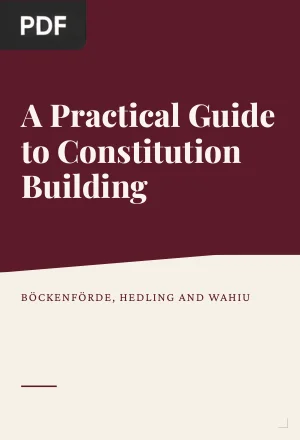
A hands-on guide to designing a constitution, from the drafting process to the hard choices on government, courts, decentralization and rights, with examples from constitutions around the world.
Markus Böckenförde, Nora Hedling and Winluck Wahiu
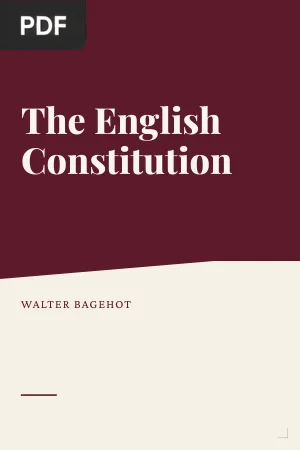
The classic account of how British government really works, separating the dignified parts of the constitution, like the monarchy, from the efficient ones, like the Cabinet and the House of Commons.
A study of how the idea of constitutionalism has moved beyond single national charters, with a framework for comparing what makes public power legitimate across systems.
Can a constitutional amendment itself be unconstitutional? Roznai compares eternity clauses and court doctrines from many countries to explain the limits of the power to amend.
A short study of how constitutions shape the economic and social order of the modern welfare state, and how constitutional law can support growth and social security.
Send this page to someone who’d love to read it. Everything is free, no sign-up needed.
Esc
Start typing to search...
Searching...
No results found
Try different search terms
Your book is downloading!
If InfoBooks helped you, you can support us in one click: add us as a preferred source on Google. You'll see more of our books when you search, and you'll help us keep sharing free reading with everyone.
Done! Your book is downloading
Know someone who’d enjoy reading it? Send them this page. It’s free, no sign-up needed, and you help us spread the love of reading.