This collection gathers 29 free Plato books in PDF, from a philosopher who studied under Socrates and founded the Academy in Athens. Writing in Classical Greece around 400 BC, Plato shaped how we still argue about justice, knowledge, and the soul.
You will find The Republic, The Symposium, Phaedo, and The Apology of Socrates here. They are grouped the way scholars group them, from the early Socratic dialogues to the middle works that build the Theory of Forms, then the late writings on law and the cosmos.
New to Plato? Every dialogue here is free to read online or download as a PDF, so you can start with something short like Euthyphro or Meno and work up to The Republic.
📚
Download every book on this page in one click
Sign in with Google and grab them all without going one by one.
We will redirect you to accounts.google.com to complete sign-in.
Email and name only · We never send spam
Access unlocked
Download every book on this page in one click
Get them all together, without going one by one.
Direct download · One ZIP file
Download started. Check your downloads folder for the ZIP.
Socratic
Plato Socratic Dialogues
These are Plato's earliest works, written while the memory of his teacher's trial was still fresh. Socrates does most of the talking and almost never reaches an answer, which is exactly the point.
Socrates defends himself before an Athenian jury and refuses to apologize for how he has lived. The shortest and most gripping way into Plato, and the best place to start if you have never read him.
A friend visits Socrates in prison with an escape plan already arranged, and Socrates argues himself into staying. A short dialogue on whether you owe obedience to laws that have wronged you.
On the courthouse steps, Socrates asks a confident young man to define piety, and watches every answer fall apart. Short, funny, and the cleanest demonstration of the Socratic method in the whole corpus.
Socrates takes on the celebrity speechmakers of Athens and argues that rhetoric without truth is flattery. It escalates into a hard question: is it better to suffer injustice than to commit it?
A packed house watches Socrates debate the most famous teacher in Greece over whether virtue can be taught. Both men end up arguing the opposite of what they started with.
Socrates meets a celebrated young Athenian and asks what self-control actually is. Every answer leads to a harder question, which is exactly the point.
Two generals are asked to define courage and discover that a lifetime of battle has not taught them what the word means. A short dialogue on expertise and its limits.
Socrates joins two boys at a wrestling school and asks what makes a friend a friend. The first sustained attempt in Western thought to say what friendship is.
A star reciter of Homer meets Socrates, who asks whether he actually knows anything or is simply inspired. The oldest argument about where artistic talent comes from.
Two brothers armed with verbal tricks try to tie Socrates in knots. A comic dialogue that doubles as a field guide to bad arguments and how to spot them.
Socrates delivers a funeral oration for Athens with a straight face and a great deal of irony. A short, sharp look at how states flatter themselves when they bury their dead.
Socrates confronts a brilliant, ambitious young man about to enter politics and asks whether he knows himself well enough to govern anyone. Know thyself, argued out in full.
Socrates argues the deliberately outrageous position that someone who does wrong on purpose is better than someone who does it by accident. A short puzzle that has bothered readers for centuries.
Socrates asks a famous polymath a simple question, what is beauty, and never gets a usable answer. This scholarly edition includes the Greek text alongside commentary and notes.
Here Plato stops reporting Socrates and starts building his own philosophy, above all the Theory of Forms. The Republic, The Symposium and Phaedo all belong to this period.
Plato builds an ideal city from scratch to answer one question: what is justice, and is the just life actually better? Contains the allegory of the cave and the Theory of Forms, and remains his most influential work.
Seven guests at a drinking party each give a speech about love, and the night ends with a drunk Alcibiades crashing in to talk about Socrates. The most entertaining dialogue Plato wrote.
Socrates spends his last hours arguing that the soul survives death, then drinks the hemlock. The Theory of Forms gets its fullest early statement here.
A walk outside the city walls turns into a conversation about love, madness, and why the soul is like a charioteer with two horses. Ends with Plato explaining why he distrusts writing.
Can virtue be taught? To find out, Socrates walks an uneducated boy through a geometry proof to argue that learning is really remembering. Short and one of the best entry points into Plato. Modern translation with clean, readable text.
Plato's most sustained attempt to define knowledge, testing three answers and rejecting all of them. The starting point for most of what epistemology has argued about since.
A young Socrates gets his Theory of Forms taken apart by an elderly Parmenides. Plato criticizing his own central idea, and the hardest dialogue in the corpus.
In his final decades Plato turned to the questions he had left alone: how the universe was made, what a workable legal code looks like, and where the good life sits. Critias, left unfinished, is also where the legend of Atlantis begins.
Plato's account of how the universe was built, by a craftsman god working from an eternal blueprint. The most influential of his works in the medieval world.
The unfinished sequel to Timaeus, and the origin of the Atlantis story. It breaks off mid sentence, which has kept people speculating for two thousand years.
Plato's longest work and his last, written as a practical legal code for a new colony rather than an ideal city. The Republic imagined; this one is designed to actually work.
A hunt for the definition of the sophist that turns into a confrontation with the problem of falsehood: how can you say something that is not? Central to Plato's late method.
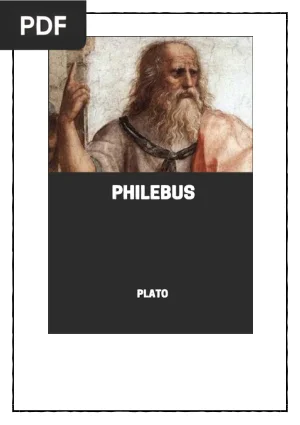
Is the good life about pleasure or about knowledge? Plato's answer is a mixture, argued with more technical precision than anywhere else in the dialogues.
A short appendix to The Laws on wisdom, astronomy, and what the highest form of knowledge might be. Traditionally transmitted with the corpus though its authorship is debated.
Plato's student Aristotle would go on to disagree with almost all of it, and Western philosophy has been running that argument ever since. The translations here are the classic public domain English versions, mostly Benjamin Jowett's, which remain the most widely read.
You can find more thinkers like him in our classic authors collection.