Gnosiology, also spelled gnoseology, is the theory of knowledge. It asks where knowledge comes from, how far it reaches, and whether we can trust it.
The word joins the Greek gnosis (knowledge) and logos (study), and in English it means the same as epistemology. It also sets the study of knowing apart from ontology, the study of being.
Here you'll find free gnosiology books in PDF, from Plato's Theaetetus to modern research on mind and science. Every book is free to read online or download.
📚
Download every Gnosiology book on this page
All the books on this page in one ZIP file, instead of downloading them one by one.
We will redirect you to accounts.google.com to complete sign-in.
Email and name only · We never send spam
Access unlocked
Download every Gnosiology book on this page
All the books on this page in one ZIP file, instead of downloading them one by one.
Direct download · One ZIP file
Download started. Check your downloads folder for the ZIP.
Modern Research
Modern Gnosiology Books
These gnosiology books apply the theory of knowledge to physics, consciousness, faith and art. Don't confuse it with Gnosticism, the ancient religious movement, since here gnosis simply means knowledge.
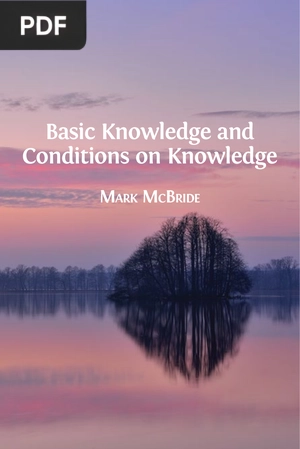
A rigorous open access monograph on basic knowledge, the beliefs we hold without having to earn them through evidence. McBride tests the classic conditions on knowledge, such as safety and sensitivity, against the puzzles that made them famous.
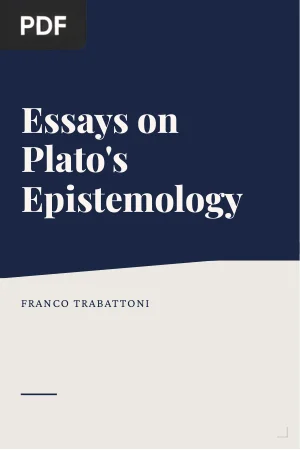
Franco Trabattoni reads the Theaetetus, Cratylus, Republic and Parmenides to show how Plato thought we come to know, and why truth for him did not demand absolute certainty. An ideal companion to the classic texts on this page.
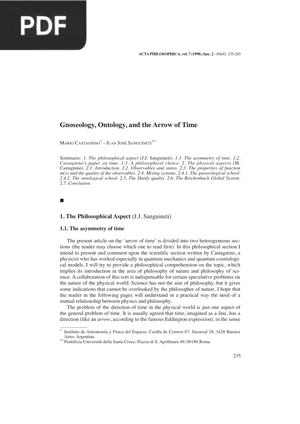
A physicist and a philosopher take on one of science's oddest puzzles: why time only runs forward. They contrast a gnoseological reading of the arrow of time, based on what we can know, with an ontological one based on how the world is.
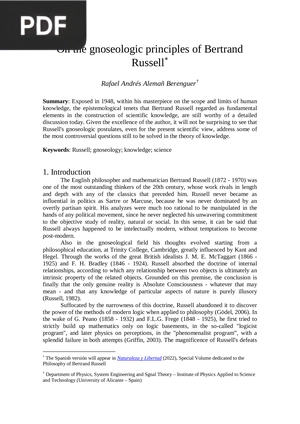
A close look at the postulates of scientific knowledge that Bertrand Russell set out in Human Knowledge: Its Scope and Limits. It weighs how well his principles hold up against today's science.
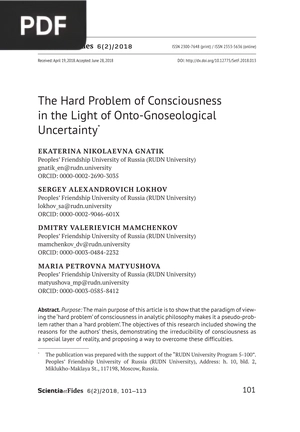
Is the hard problem of consciousness a real problem? Four philosophers argue it is a pseudo-problem created by the analytic framework, and propose treating consciousness as its own layer of reality.
Ekaterina Gnatik, Sergey Lokhov, Dmitry Mamchenkov, Maria Matyushova
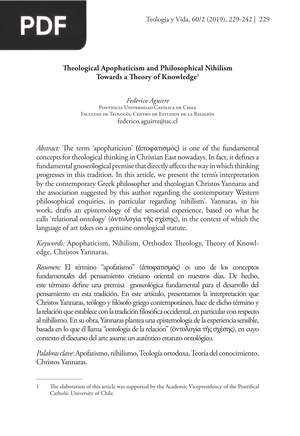
How can we know what lies beyond words? This article explores apophaticism, the negative way of knowing in Eastern Christian theology, through Christos Yannaras and his dialogue with Western nihilism.
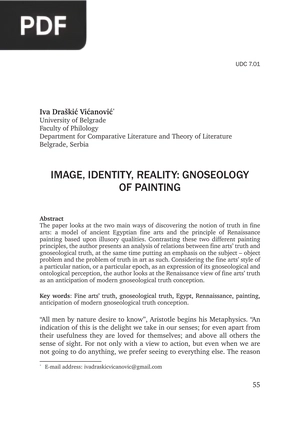
What kind of truth does a painting tell? This short article contrasts ancient Egyptian art with Renaissance illusionism and reads each one as a theory of knowledge in visual form.
The classic theory of knowledge starts with Plato and runs through Immanuel Kant and Bertrand Russell. These are the texts that every course on knowledge goes back to.
Plato's deepest attempt to define knowledge. Socrates tests whether it is perception, true belief, or true belief with an account, and the problems he finds still drive the theory of knowledge today.
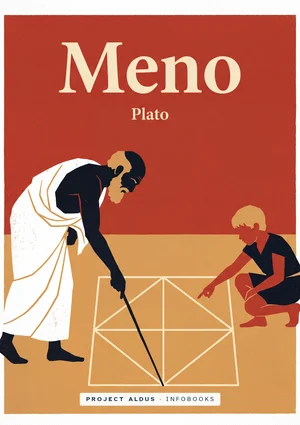
Can we learn something we don't already know? Socrates guides a young slave through a geometry proof to argue that learning is recollection, the first theory of knowledge prior to experience.
Kant's map of what reason can and cannot know. It explains how space, time and the categories shape all experience, and why metaphysics overreaches when it goes beyond them.
Russell's short classic on what we can know for certain, from the existence of matter to knowledge by acquaintance and by description. Still the friendliest entry point to the theory of knowledge.
Russell's 1914 Lowell Lectures on how we can know a world beyond our senses. He uses the new logic to rebuild physical objects out of sense data, a landmark of analytic philosophy.
Prichard's classic 1909 commentary walks through the Critique of Pure Reason argument by argument, from space and time to the refutation of idealism. Best read side by side with Kant.
A clear introduction to ancient Pyrrhonism and its main source, Sextus Empiricus, from his life to the ten modes of doubt. Includes a translation of the first book of the Pyrrhonic Sketches.
Cicero's dialogue on Academic skepticism, the school that held certainty is out of reach and only probability can guide us. Both surviving books in the C. D. Yonge translation, with introduction and notes.
The ancient report on Pyrrho and Timon from Diogenes Laertius, with Greek text, English translation, commentary and essays by leading scholars such as Richard Bett and David Sedley.
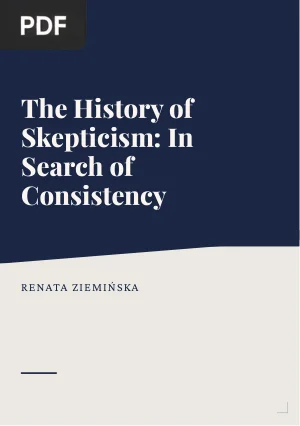
A history of skepticism from Pyrrho to Kripke. Ziemińska shows why every global skeptic falls into the same pragmatic inconsistency, and what doubt has taught us about the limits of knowledge.
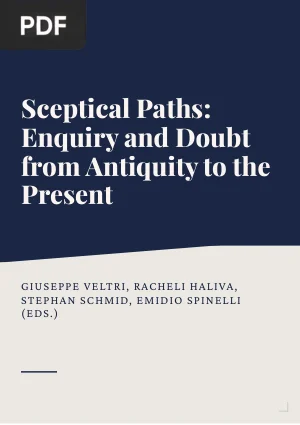
Studies on skeptical arguments from antiquity to today, including Jewish, Islamic and early modern thinkers often left out of the story. A wide view of how doubt has shaped philosophy.
Giuseppe Veltri, Racheli Haliva, Stephan Schmid, Emidio Spinelli (eds.)
Gnosiology also grew from a long debate between the senses and reason. Read Locke and Hume in our empiricism books, and Descartes in our rationalism books.
Send this page to someone who’d love to read it. Everything is free, no sign-up needed.
Esc
Start typing to search...
Searching...
No results found
Try different search terms
Your book is downloading!
If InfoBooks helped you, you can support us in one click: add us as a preferred source on Google. You'll see more of our books when you search, and you'll help us keep sharing free reading with everyone.
Done! Your book is downloading
Know someone who’d enjoy reading it? Send them this page. It’s free, no sign-up needed, and you help us spread the love of reading.