These free PDF books by famous philosophers take you straight to the source. Read Plato, Aristotle, Descartes and John Stuart Mill in their own words, not in summaries.
Every book here is a primary work, written by the philosopher who shaped the debate. The Republic, The Prince, Leviathan and On Liberty are all here, the texts other books keep quoting.
We sorted the collection by era, from ancient Greece to the 19th century. Follow the ideas in order, or jump straight to the period you need.
📚
Download every book by famous philosophers on this page
All the books on this page in one ZIP file, instead of downloading them one by one.
We will redirect you to accounts.google.com to complete sign-in.
Email and name only · We never send spam
Access unlocked
Download every book by famous philosophers on this page
All the books on this page in one ZIP file, instead of downloading them one by one.
Direct download · One ZIP file
Download started. Check your downloads folder for the ZIP.
Antiquity
Books by Ancient Philosophers
Ancient philosophers start the conversation: Socrates asks the questions, Plato writes them down and Aristotle organizes almost everything. Seneca and Marcus Aurelius then turn Stoic ideas into advice for daily life.
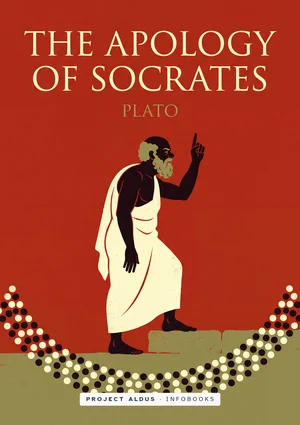
Socrates on trial for his life, defending the examined life before the jury of Athens. Benjamin Jowett's classic translation, with an introduction that sets the scene.
A dinner party where Socrates and his friends take turns praising love, from Aristophanes' split humans to Diotima's ladder of beauty. Plato at his most playful, in Benjamin Jowett's translation.
Plato's search for justice builds an ideal city and gives us the allegory of the cave. Jowett's translation, with his full introduction and analysis to guide you through all ten books.
Aristotle compares constitutions, from monarchy to democracy, to find the best form of government and the role of the citizen in it. Benjamin Jowett's translation.
The first theory of literature: tragedy, plot, character and catharsis, in a few dense pages that still shape how stories are written. S. H. Butcher's translation.
Seneca's letters to his friend Lucilius turn Stoic philosophy into daily advice on time, fear, friendship and death. Richard Mott Gummere's translation.
The private notebook of a Roman emperor, written to remind himself how to stay calm, fair and humble. Our own Project Aldus edition, newly typeset for easy reading.
For a thousand years, medieval philosophers tried to make faith and reason fit together. Saint Augustine, Boethius, Anselm, Maimonides and Thomas Aquinas each found a different answer.
Augustine tells the story of his restless youth and his conversion, and turns it into a meditation on memory, time and desire. The first great autobiography of the West.
Written after the sack of Rome, Augustine's vast defense of Christianity contrasts the earthly city with the heavenly one. Complete in twenty-two books, translated by Marcus Dods.
Awaiting execution in prison, Boethius imagines Lady Philosophy visiting his cell to talk about fortune, happiness and God. The most read book of the Middle Ages, in W. V. Cooper's translation.
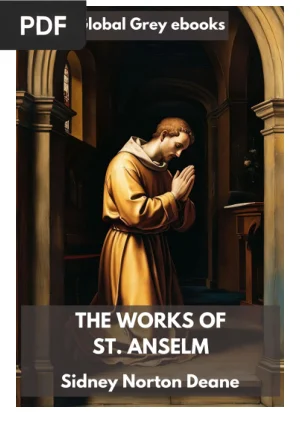
Includes the Proslogium, home of the famous ontological argument for God's existence, plus the Monologium and Cur Deus Homo. Sidney Norton Deane's translation, with Gaunilo's classic reply.
Maimonides wrote it for readers torn between scripture and Aristotle, and showed how faith and reason can live together. Michael Friedländer's complete translation.
Aquinas' great synthesis of Christian theology and Aristotle, including the five ways to prove God's existence. The complete text, translated by the Fathers of the English Dominican Province.
These philosophers stopped asking what tradition said and started over from power, doubt and reason. Here you'll meet Machiavelli, Thomas More, Descartes, Hobbes, Pascal and Spinoza.
Machiavelli's short, blunt manual on how power is won and kept, the book that turned his name into an adjective. Our own Project Aldus edition, with an introduction to his life in Renaissance Florence.
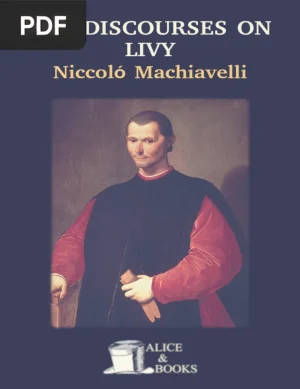
The other Machiavelli: a long reflection on the Roman Republic and why free states rise and fall. Read it next to The Prince to see the whole picture. Ninian Hill Thomson's translation.
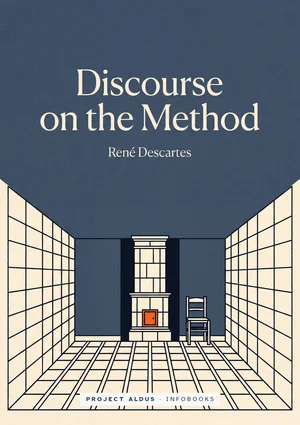
Descartes tells how he decided to doubt everything and rebuild knowledge from a single certainty: I think, therefore I am. A short, personal book that launched modern philosophy.
Hobbes pictures life without government as nasty, brutish and short, and argues for a strong sovereign to escape it. The complete text in a clean modern layout.
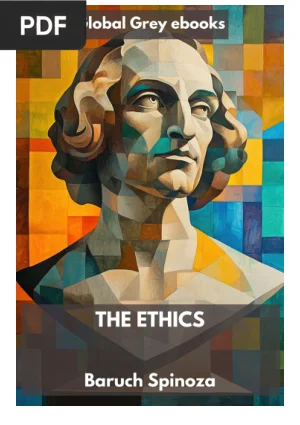
Spinoza's masterpiece, built like a geometry book, argues that freedom comes from understanding our emotions and our place in nature. R. H. M. Elwes' translation.
Enlightenment philosophers asked what we can really know and who has the right to rule. Locke, Voltaire, Hume, Rousseau and Kant answered, and Mary Wollstonecraft asked why women were left out.
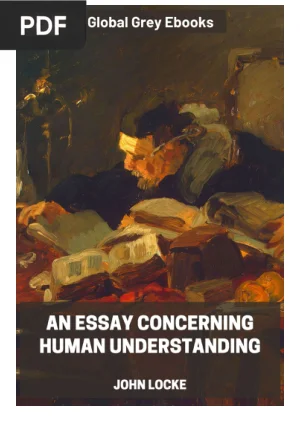
Locke argues that the mind starts as a blank slate and that all our ideas come from experience. The founding text of British empiricism, complete in four books.
Voltaire's letters from exile praise English tolerance, Newton and Locke, and were burned in Paris for it. Henry Morley's edition, with an introduction.
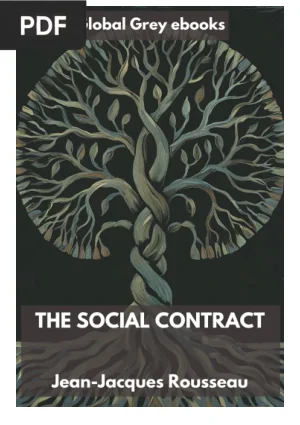
Rousseau explains what makes a government legitimate, starting from one of philosophy's most famous lines: man is born free, and everywhere he is in chains. Includes an introduction and a bibliography.
In the 1800s, philosophers turned to freedom, the meaning of life and the inner self. Read Emerson, Kierkegaard, Schopenhauer, Thoreau, John Stuart Mill, Nietzsche and William James.
Key texts by the father of existentialism, including Diapsalmata, In Vino Veritas and Fear and Trembling. Lee M. Hollander's classic translation, with an introduction.
Mill's defense of free speech and individual freedom, and the harm principle that sets the limits of state power. With an introduction by W. L. Courtney.
Nietzsche's philosophical poem, where the prophet Zarathustra comes down from the mountains to announce the death of God and the overman. Thomas Common's translation.
Eight lectures where James asks one simple question of every idea: what difference does it make in practice? The book that put American pragmatism on the map.
These classic books by famous philosophers are free to read online or download, no sign-up needed. For more from one thinker, visit our shelves for Descartes, Voltaire, Kant, Schopenhauer and Nietzsche.
Send this page to someone who’d love to read it. Everything is free, no sign-up needed.
Esc
Start typing to search...
Searching...
No results found
Try different search terms
Your book is downloading!
If InfoBooks helped you, you can support us in one click: add us as a preferred source on Google. You'll see more of our books when you search, and you'll help us keep sharing free reading with everyone.
Done! Your book is downloading
Know someone who’d enjoy reading it? Send them this page. It’s free, no sign-up needed, and you help us spread the love of reading.