This collection of free books in Esperanto runs from easy stories for beginners to Don Quixote and the darkest tales of Edgar Allan Poe. You'll also find plays, children's books, original Esperanto literature, and the Bible.
L. L. Zamenhof, the creator of Esperanto, translated many of these books himself, from Hamlet to Andersen's fairy tales. Reading a story you already know makes a new language much easier to follow.
Pick your level, or start with our Esperanto learning books if the language is new to you. Every book is free to read online or download as PDF.
📚
Download every Esperanto book on this page
All the books on this page in one ZIP file, instead of downloading them one by one.
We will redirect you to accounts.google.com to complete sign-in.
Email and name only · We never send spam
Access unlocked
Download every Esperanto book on this page
All the books on this page in one ZIP file, instead of downloading them one by one.
Direct download · One ZIP file
Download started. Check your downloads folder for the ZIP.
Beginners
Esperanto Books for Beginners
Start with Esperanto books whose stories you already know, like Alice in Wonderland, The Little Prince, and The Wizard of Oz. When you know the plot, you can focus on the words instead of guessing what happens next.
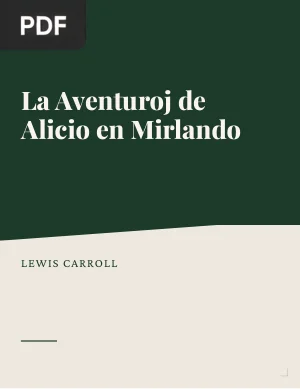
Lewis Carroll's classic tale of Alice's fall into a world of talking animals and impossible logic, in E. L. Kearney's 1910 Esperanto translation. A story most readers already know, which makes the new vocabulary much easier to follow.
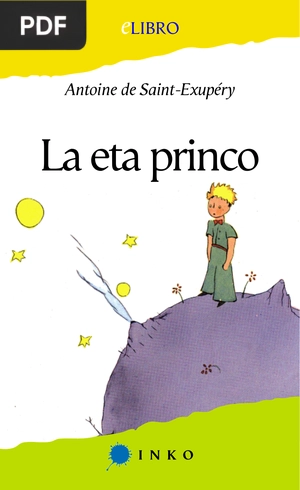
The Little Prince in Esperanto, illustrated with Saint-Exupéry's own watercolors. Short chapters and simple sentences make it one of the most loved first reads for new learners.
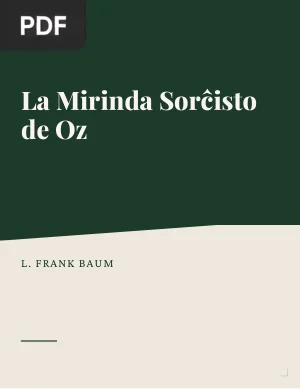
Dorothy, the Scarecrow, the Tin Woodman and the Cowardly Lion follow the yellow brick road in Donald Broadribb's complete translation. Clear, modern prose for readers taking their first steps in Esperanto.
Scrooge meets the ghosts of Christmas Past, Present and Yet to Come in a concise version of Dickens' holiday classic. Martyn Westcott's 1905 translation, revised in easy, modern Esperanto.
Pushkin's short story of a secret elopement that goes wrong on a snowy night, translated by the pioneer Esperanto poet Antoni Grabowski in 1888. At under 20 pages, an ideal first complete story.
These intermediate Esperanto books are longer, with richer vocabulary and natural dialogue. Charles Dickens' The Battle of Life was translated by Zamenhof himself in 1891, just four years after Esperanto was born.
Stevenson's gripping story of a respected doctor and his monstrous other self, in the 1909 translation by William Morrison and William W. Mann, revised for smoother reading.
The castaway who builds a new life on a desert island, retold in Esperanto by A. Krafft in 1908. A shorter, lively version of Defoe's adventure that keeps every key moment of the story.
A Dickens love story set on an old battlefield, translated by L. L. Zamenhof himself in 1891, just four years after Esperanto was born. A chance to read the language as its creator wrote it.
Louisa May Alcott's Civil War story of a nurse, a formerly enslaved man and a dangerous secret, translated by Edwin Grobe. A short, moving read with natural dialogue.
Two children grow up together on a tropical island in this famous 18th-century romance. Translated by Hector Hodler, co-founder of the Universal Esperanto Association, in fluent and elegant prose.
These advanced Esperanto books are a real challenge, with dense vocabulary and long, complex sentences. The complete Don Quixote runs over 1,400 pages, next to Kafka, Balzac, and four dark tales by Edgar Allan Poe.
The complete Don Quixote, both parts, in more than 1,400 pages of Esperanto. Fernando de Diego's translation in a revised digital edition with notes, the ultimate challenge for advanced readers.
Josef K. is arrested one morning without ever learning his crime in Kafka's unsettling masterpiece. A complete, carefully proofread translation by Dorothea and Hans-Georg Kaiser.
A young widow fights to support her daughter in a society that gives women almost no way to earn a living. Zamenhof translated this powerful novel himself, and it remains a landmark of early Esperanto prose.
Goethe's epic poem about a young man who falls in love with a refugee girl, told in nine cantos of verse. Benno Küster's 1922 translation opens with a preface on the work and its time.
A draper's daughter marries a brilliant painter and learns how far apart their worlds really are. Balzac's sharp portrait of love and social class, translated by Paul Benoit in 1924.
A young man writes to a Paris merchant asking for his daughter's hand, and a lighthearted story of courtship and family pride unfolds. Adapted into Esperanto from Dumas by Benedict Papot in 1909.
Ichabod Crane meets the Headless Horseman in Washington Irving's famous ghost story. Edwin Grobe's translation keeps the rich, descriptive style that makes it a rewarding advanced read.
A visitor arrives at a gloomy mansion where the last of the Usher family is slowly coming apart. Poe's most atmospheric horror tale, full of dense, dark vocabulary.
A prisoner of the Spanish Inquisition recounts his terrifying ordeal in a pitch-black dungeon. One of Poe's most intense tales, translated by Alex. Pride.
Six Poe stories in one volume, including The Oval Portrait, The Cask of Amontillado and Some Words with a Mummy. A. Frank Milward's 1924 translation opens with an essay on Poe's strange genius.
These Esperanto books for children include Aesop's fables, Andersen's fairy tales, Pinocchio, and Gulliver in Lilliput. Short chapters and clear stories make them great for reading aloud, at any age.
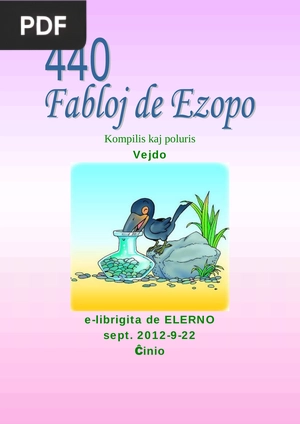
440 of Aesop's fables in Esperanto, each a short story with a clear moral. Perfect for reading aloud with children or for learners who want bite-sized practice.
The Tinderbox, The Little Mermaid and many more of Andersen's best-loved fairy tales, translated by L. L. Zamenhof himself. The first of four volumes, and a joy to read aloud.
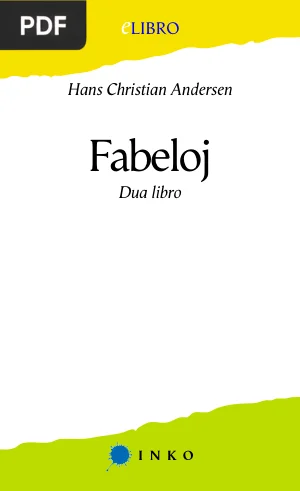
The second volume of Andersen's fairy tales in Zamenhof's classic translation, with dozens more stories of princesses, talking animals and everyday magic.
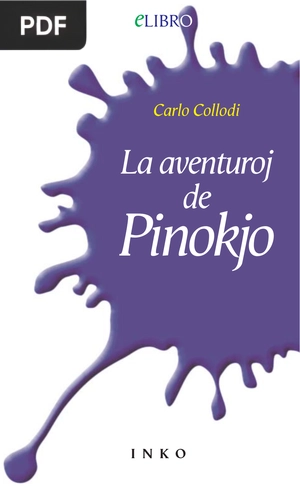
The wooden puppet whose nose grows with every lie, in Giuseppe Croatini's Esperanto translation. Includes Enrico Mazzanti's illustrations from the very first 1883 edition.
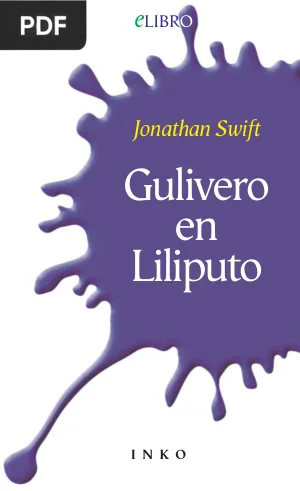
Gulliver wakes up tied to the ground by an army of tiny people in this shortened, illustrated version of Swift's adventure. Written for young readers, with J. R. Monsell's drawings.
Classic plays by Shakespeare, Molière, Goethe, Schiller, and Karel Čapek, all translated into Esperanto. Zamenhof translated four of them himself, including Hamlet, to prove his new language could carry great literature.
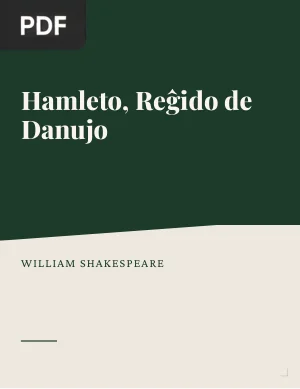
Shakespeare's great tragedy of revenge and doubt, translated by L. L. Zamenhof in 1894 to prove the new language could carry world literature. Complete in five acts.
An ambitious general murders his way to the throne of Scotland in Shakespeare's darkest tragedy. D. H. Lambert's 1908 translation opens with a preface on the four great tragedies.
The exiled magician Prospero conjures a storm to bring his enemies to his island. Shakespeare's last great play, translated by Achille Motteau and dedicated to Zamenhof.
Goethe's verse drama of a Greek priestess torn between loyalty and truth, in Zamenhof's translation. It was performed at the 1908 World Esperanto Congress in Dresden, and this edition includes photos of that premiere.
The play that gave the world the word robot: a factory builds artificial workers who rise up against humanity. A 1926 Esperanto translation of Čapek's science fiction classic.
These Esperanto texts were written in the language from the start, not translated into it. Kastelo de Prelongo (1907) was the first novel written in Esperanto, and Zamenhof's own anthology adds early stories and poetry.
Published in 1907, this is the first novel ever written directly in Esperanto. A family drama of secrets, crime and inheritance around an old castle, written by the French doctor Henri Vallienne in about 150,000 words.
An original Esperanto novel set in ancient Mesopotamia, full of temples, kings and the cult of the goddess Ishtar. One of the best-known early novels written in Esperanto from the start.
Zamenhof's classic anthology of early Esperanto writing: stories, anecdotes, articles and poems, including his own La Espero. The collection that set the model for good Esperanto style.
Thousands of proverbs and sayings collected and rendered into Esperanto by Zamenhof, arranged alphabetically. A treasure of idiomatic expressions that brings the language to life.
Zamenhof's speeches, from a 1904 gramophone greeting to his addresses at the World Esperanto Congresses. His own words on the ideals behind the language.
Genesis and the books that follow it, in the Old Testament translation L. L. Zamenhof made directly from Hebrew. The first part of the classic Esperanto Bible.
Send this page to someone who’d love to read it. Everything is free, no sign-up needed.
Esc
Start typing to search...
Searching...
No results found
Try different search terms
Your book is downloading!
If InfoBooks helped you, you can support us in one click: add us as a preferred source on Google. You'll see more of our books when you search, and you'll help us keep sharing free reading with everyone.
Done! Your book is downloading
Know someone who’d enjoy reading it? Send them this page. It’s free, no sign-up needed, and you help us spread the love of reading.