Looking for free persuasion books in PDF? Here you'll find the psychology of influence, classic rhetoric, and guides to persuasive writing, all free with no sign-up.
From Aristotle's ethos, pathos, and logos to Edward Bernays' Propaganda, these books show how minds really change. You'll also find the lectures on influence that Dale Carnegie drew on for How to Win Friends and Influence People.
Start with the psychology of persuasion to learn why people say yes.
📚
Download every Persuasion book on this page
All the books on this page in one ZIP file, instead of downloading them one by one.
We will redirect you to accounts.google.com to complete sign-in.
Email and name only · We never send spam
Access unlocked
Download every Persuasion book on this page
All the books on this page in one ZIP file, instead of downloading them one by one.
Direct download · One ZIP file
Download started. Check your downloads folder for the ZIP.
Psychology
Persuasion Psychology Books
Why do people say yes? These persuasion books explain the mental shortcuts behind influence, from suggestion to the power of emotion.
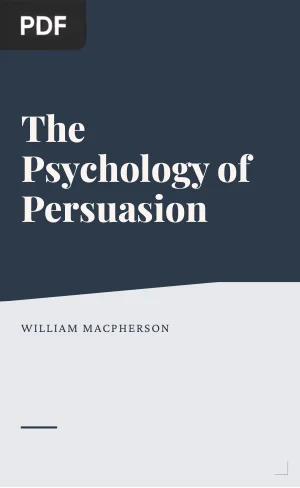
A 1920 classic on why emotions and beliefs, not pure logic, move people to act. MacPherson explains suggestion, the role of feeling, and how to present a case that wins agreement.
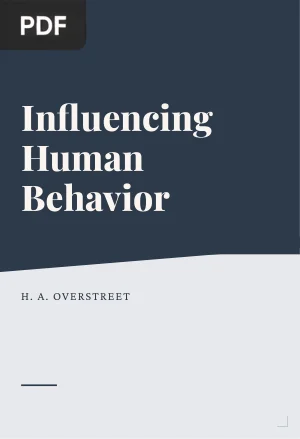
The 1925 lectures Dale Carnegie drew on for How to Win Friends and Influence People. Overstreet shows how to capture attention, get a yes-response, and change habits in speaking, writing, and daily life.
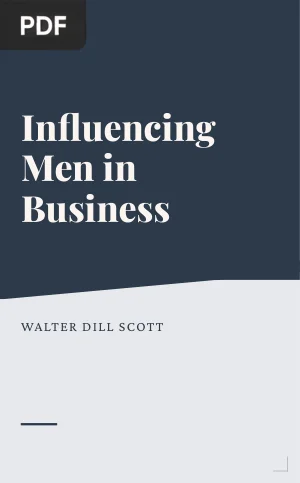
A pioneer of applied psychology explains how people deliberate, why suggestion often beats argument, and how to present a proposal so it gets accepted.
A concise open textbook on the main theories of persuasion, from the Theory of Planned Behavior to fear and hope appeals, with real-world applications for each model.
Rhetoric is the original art of persuasion, born in ancient Greece and Rome. Start with Aristotle, Plato, and Cicero, then follow the art of argument into modern public discourse.
The foundational work on persuasion. Aristotle explains ethos, pathos, and logos, how to build arguments, and how to adapt a speech to its audience, in the classic W. Rhys Roberts translation.
Plato's dialogue on the power and limits of rhetoric. Socrates asks whether persuasion without knowledge is a true art or mere flattery, in Benjamin Jowett's translation with introduction.
Cicero's De Oratore, his dialogue on what makes a great speaker, together with Brutus and his letters. It covers argument, style, delivery, and the use of humor to win over an audience.
An academic collection on how persuasion works in politics, advertising, and the media. Linguists analyze real public discourse to reveal the language and framing strategies used to change minds.
A practical guide to spotting and analyzing persuasive techniques in the media, from emotional appeals to tone. Includes annotated examples, cartoon analysis, and writing activities.
Edward Bernays' 1928 classic on how public opinion is shaped. The father of public relations explains the techniques behind modern advertising, politics, and mass persuasion.
Gustave Le Bon's 1895 study of crowd psychology. It explains why people in groups think and act differently, and how leaders use images, repetition, and prestige to sway them.
Walter Lippmann's landmark 1922 book on how the pictures in our heads shape what we believe. A deep look at stereotypes, the press, and the manufacture of consent.
Bernays' first book, from 1923, which defined the work of the public relations counsel. It shows how group loyalties and habits shape opinion, and how a campaign can move them.
A classic on the herd instinct and why people follow the group. Trotter explains suggestibility and conformity, ideas that shaped later thinking on propaganda and mass persuasion.
A complete open textbook on persuasive writing. Learn to analyze persuasion, build a thesis, work with evidence and sources, and write arguments that convince your readers.
A clear guide to writing and analyzing arguments. Anna Mills walks you through claims, reasons, counterarguments, and rhetorical analysis, with many examples and practice activities.
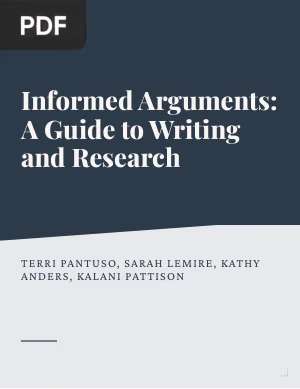
A guide to argumentative writing and research. It covers rhetorical appeals, logical fallacies, building a strong thesis, and finding and citing credible sources.
Terri Pantuso, Sarah LeMire, Kathy Anders, Kalani Pattison
Send this page to someone who’d love to read it. Everything is free, no sign-up needed.
Esc
Start typing to search...
Searching...
No results found
Try different search terms
Your book is downloading!
If InfoBooks helped you, you can support us in one click: add us as a preferred source on Google. You'll see more of our books when you search, and you'll help us keep sharing free reading with everyone.
Done! Your book is downloading
Know someone who’d enjoy reading it? Send them this page. It’s free, no sign-up needed, and you help us spread the love of reading.