Resilience is the capacity to bounce back from adversity and grow stronger through it. Our library brings together 47 free resilience books in PDF, with reading lists for personal development, workplace continuity, parenting, and military training.
You will find foundational reads, practical toolkits, parenting handbooks, and white papers on organizational resilience. Researchers like Ann S. Masten, Karen Reivich, Steven Southwick, and Brené Brown have shaped the modern understanding of psychological resilience and its sibling concept, mental toughness.
Pick a section that matches your situation today, whether you are recovering from a setback, training a team, or helping a child cope with change. All books are free PDFs you can download in one click.
📚
Download every Resilience book on this page
All the books on this page in one ZIP file, instead of downloading them one by one.
We will redirect you to accounts.google.com to complete sign-in.
Email and name only · We never send spam
Access unlocked
Download every Resilience book on this page
All the books on this page in one ZIP file, instead of downloading them one by one.
Direct download · One ZIP file
Download started. Check your downloads folder for the ZIP.
Foundational
Books on Resilience
These are foundational guides for understanding what resilience is and how to build it. Most are full-length books or comprehensive handbooks from academic and institutional sources.
IFRC roadmap for operationalizing community resilience through risk reduction, livelihoods, and disaster preparedness. Includes step-by-step assessments and field-tested intervention models.
The International Federation of Red Cross and Red Crescent Societies
Centre for Liveable Cities playbook on measuring and strengthening community resilience through social capital and citizen-led projects. Draws on case studies and provides a co-creation framework.
PhD thesis from the University of Canterbury that develops a grounded-theory model of resilience based on interviews with adults facing chronic adversity. Useful for graduate students and researchers exploring resilience as a lived process.
University of Bremen working paper that traces the historical roots of the resilience concept from ecology and engineering to its current uses in critical infrastructure design. Best for readers interested in the multidisciplinary genealogy of the term.
Stefan Gößling-Reisemann, Hans Dieter Hellige, Pablo Thier
Argonne National Laboratory technical report that synthesizes definitions, properties, and measurement approaches for resilience across infrastructure, ecological, and social systems. Strong reference for theory-driven readers.
Chapter from the Handbook of Well-Being that maps how resilience has been defined and measured, with emphasis on its relationship with psychological well-being. Differentiates resilience from hardiness, grit, and psychological capital.
Open-access study from the National University of Malaysia that quantifies the relationship between grit personality and resilience among university students using validated scales. Helpful for readers comparing the two constructs.
Muhammad Syaril Anwar Mustaza, Faridah Mydin Kutty
Short student paper that compares definitions of resilience and reviews protective factors that contribute to it in daily life. Covers strategies, benefits, and limitations of common resilience techniques.
These titles focus on emotional regulation and the inner work of resilience. Recommended if you are recovering from a setback or want to strengthen your day-to-day coping.
Ten-chapter workbook from the Church of Jesus Christ of Latter-day Saints on building emotional self-reliance through faith, mindfulness, and relationship habits. Includes weekly exercises and discussion prompts.
UK Government evidence review on how emotional and personal resilience evolves across the lifespan, with focus on aging populations. Synthesizes psychological, social, and ecological frameworks for policy and practice.
University of Minnesota Extension guide that introduces resilience as a learnable capacity and walks through the daily habits that strengthen it. Useful first read for self-improvement audiences.
Patient information booklet from Kidney Care UK on building emotional resilience while living with a long-term health condition. Covers stress, coping strategies, and mindfulness techniques.
Interactive PDFs with exercises, assessments, and printable worksheets. Ideal if you prefer to work through resilience step by step rather than read a long book.
Comprehensive toolkit hosted by Adrian College with seventy-three structured exercises across eight resilience domains: assessment, challenging assumptions, coping with adversity, emotion regulation, meaningful goals, hopefulness, wellness, and interpersonal effectiveness. Each tool follows a What to Know, What to Do, and Reflection format.
Wofford College workbook with well-being exercises rooted in positive psychology, including gratitude, grit, mindfulness, and acts of kindness. Easy to start in a single sitting and useful for students or anyone designing a personal resilience routine.
Workshop workbook developed by the Lyda Hill Institute for Human Resilience at UCCS. Walks readers through four modules: stress, resilience, communication, and a personal self-care plan, with worksheets to complete at every stage.
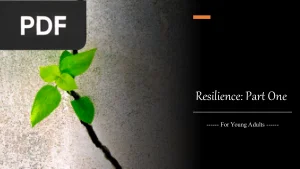
Concise resilience assessment for young adults covering self-evaluation, previous coping strategies, strength exploration, and goal setting. Adapted from established therapeutic worksheets and ready to print.
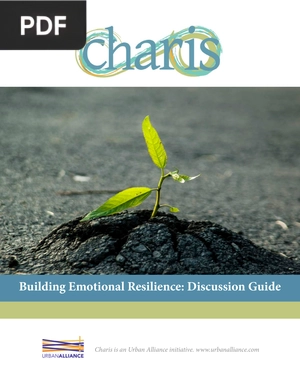
Discussion guide from Urban Alliance with structured prompts to build emotional resilience in small groups. Includes Biblical framing alongside practical coping concepts.
Self-assessment questionnaire from Health Education England with twelve resilience items and a scoring guide. Includes a ten-point booster plan for areas of weakness.
Resources for parents, teachers, and caregivers working with kids and youth. Includes age-specific guidance from UNICEF, Beyond Blue, and child psychology specialists.
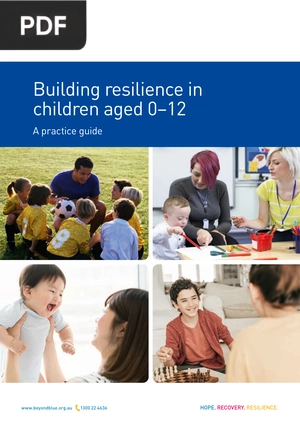
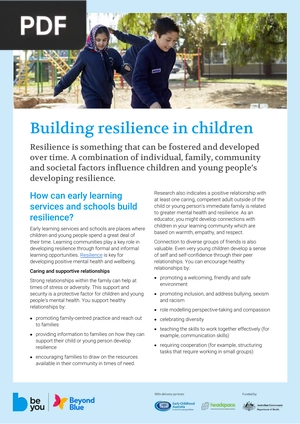
Beyond Blue practice guide for early educators and caregivers raising resilient children from birth to age twelve. Includes service-delivery strategies and conversation tools for daily interactions.
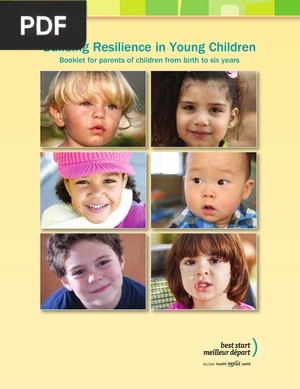
Best Start booklet for parents of children from birth to age six, with up-to-date guidance, parent stories, and tested tips for boosting early childhood resilience.
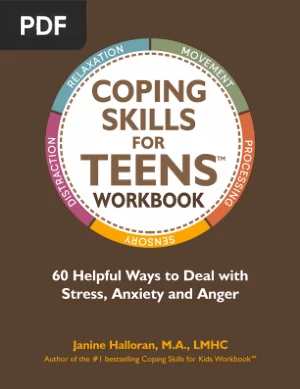
Workbook by licensed mental-health counselor Janine Halloran with sixty coping strategies for teens. Covers calming skills, physical activities, distraction techniques, processing tools, and concrete worksheets families and clinicians can reuse.
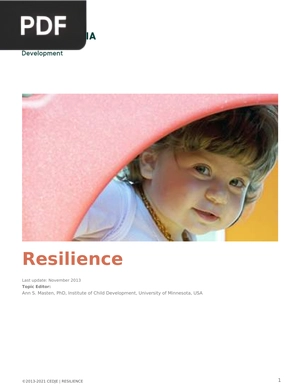
CEDJE Encyclopedia compilation curated by Ann S. Masten, gathering papers from leading developmental scientists on early-childhood resilience, neurobiology, and intervention. Strong reference for academics and clinicians.
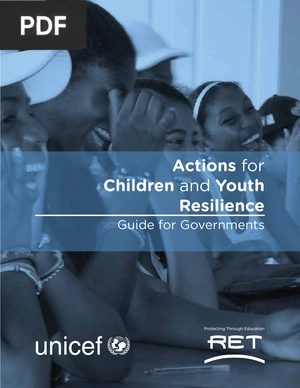
UNICEF and RET guide for governments on policies that build resilience in children and youth, with frameworks from fifteen consultations across Latin America and the Caribbean.
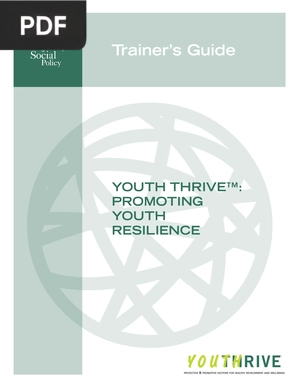
Center for the Study of Social Policy trainer guide for the Youth Thrive framework. Walks facilitators through protective and promotive factors and includes reflection worksheets for each session.
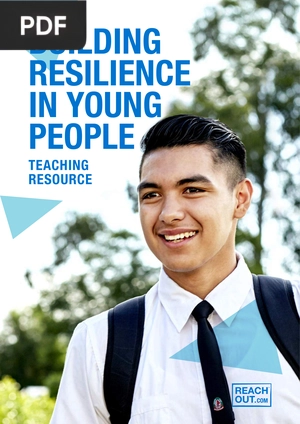
ReachOut Schools teaching resource built around Reivich and Shatte resilience factors. Includes classroom activities and skill-building exercises for young people aged twelve to eighteen.
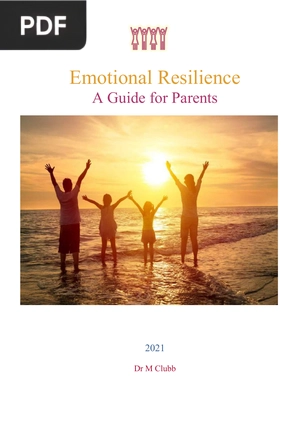
Dr Michelle Clubb guide for parents supporting children with additional needs. Combines cognitive behavioural therapy, mindfulness, and positivity ratios into a structured plan for emotional resilience.
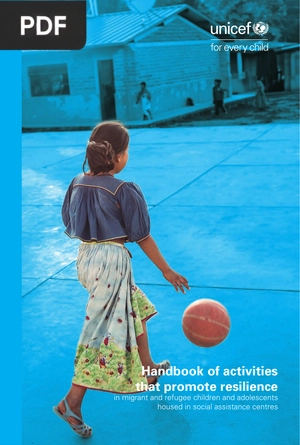
UNICEF handbook with activities designed to promote resilience in migrant and refugee children and adolescents in shelter and assistance centres. Includes session plans and facilitator notes.
Business continuity, workforce wellbeing, and team-level resilience. Useful for HR leaders, managers, and consultants designing resilience programs at scale.
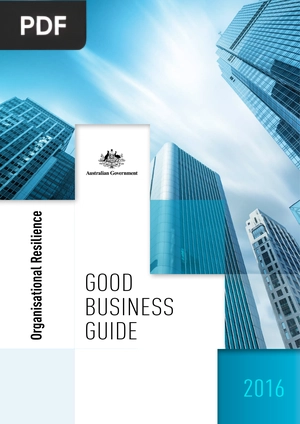
Australian Government guide that explains organisational resilience for boards and senior leaders, covering culture, supply chains, and crisis governance. Includes self-assessment prompts and tipping-point planning.
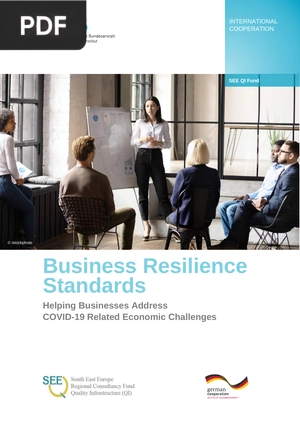
SEE QI Fund manual that compiles standards for business resilience in response to COVID-19, covering risk assessment, leadership, and operational continuity for emerging-market companies.
KPMG guide on maintaining business resilience during and after COVID-19, organized by financial, operational, commercial, and community resilience pillars. Includes diagnostic questions for executives.
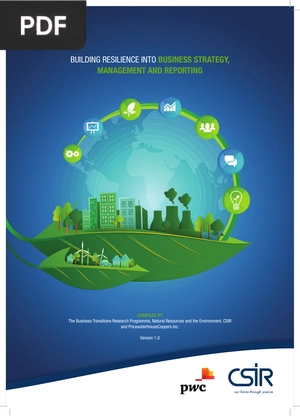
PwC South Africa and CSIR collaboration on embedding resilience into business strategy, management, and sustainability reporting. Includes worksheets for seven core resilience principles.
BSI Group whitepaper from chief executive Howard Kerr that frames organizational resilience as a strategic discipline anchored in product excellence, process reliability, and people development.
US Chamber of Commerce Foundation workbook that walks small business owners through Resilience in a Box: a partnership program with UPS, the World Economic Forum, and CENACED to build disaster readiness.
Brentwood Borough Council business continuity manual for local businesses and voluntary organisations, structured around a five-step planning guide and ten top tips.
Kelly Services workforce insight on do-it-yourself career resilience. Helps employers attract and retain workers who actively manage their own skill development in uncertain markets.
Working With Resilience whitepaper by organisational psychologist Kathryn McEwen. Presents the Resilience at Work framework for coaching individuals, teams, and leaders.
Allianz workplace mental health guide on preventing and responding to burnout. Covers just workplaces, manageable workloads, time pressures, and effective communication, with parallel chapters for employers and employees.
University of Toronto Human Resources tip sheet on building resilience and preventing burnout. Highlights practical wellbeing habits and pointers to professional support channels for employees.
Frameworks and training materials from the U.S. Army Comprehensive Soldier Fitness program and related research. Useful for readers in defense, emergency services, or high-stress operational roles.
American Psychologist article that introduces the Comprehensive Soldier Fitness program and positions positive psychology as the third great national-need moment for psychology. Authored by Martin Seligman and APA past CEO Raymond Fowler.
Penn Positive Psychology Center paper describing the ten-day Master Resilience Trainer course that teaches sergeants how to deliver resilience skills to soldiers. Outlines the curriculum modules and the empirical foundations behind each one.
Karen J. Reivich, Martin E. P. Seligman, Sharon McBride
Technical evaluation of the Comprehensive Soldier Fitness Master Resilience Training program. Reports a longitudinal analysis of self-reported resilience and psychological health outcomes among U.S. Army soldiers.
Paul B. Lester, P. D. Harms, Mitchel N. Herian, Dina V. Krasikova, Sarah J. Beal
American Psychological Association brochure that introduces resilience as an ongoing process and provides a ten-step strategy for navigating adversity.
IOM article that summarises the core characteristics of resilience and offers practical strategies to develop awareness, realism, and problem-solving habits.
Scoping literature review that recognizes resilience in children through Relational Developmental Systems theory, examining environmental factors, individual characteristics, and their interaction.
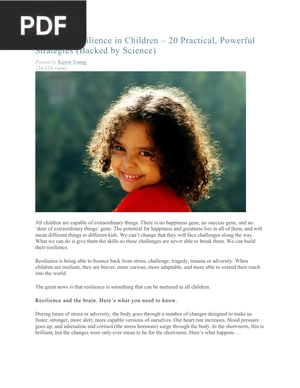
Karen Young article with twenty research-backed strategies for building resilience in children, from connection and praise to reframing setbacks as learning opportunities.
Cumbria County Council parenting factsheet with practical tips for building resilience in primary-school children, including routines, self-care, and trusted relationships.
Be You guide for early learning services and schools on the role of caring relationships, family-centred practice, and community resources in fostering resilience.
Send this page to someone who’d love to read it. Everything is free, no sign-up needed.
Esc
Start typing to search...
Searching...
No results found
Try different search terms
Your book is downloading!
If InfoBooks helped you, you can support us in one click: add us as a preferred source on Google. You'll see more of our books when you search, and you'll help us keep sharing free reading with everyone.
Done! Your book is downloading
Know someone who’d enjoy reading it? Send them this page. It’s free, no sign-up needed, and you help us spread the love of reading.