Ergonomics is the science of fitting work to people, and these free ergonomics books in PDF show you how. From office desks and factory lines to aircraft cockpits, each guide is ready to read online or download.
You'll learn to set up a healthy workstation, prevent back and wrist injuries, and lift loads safely. There are also human factors manuals from NASA and the FAA, plus beginner guides from the International Ergonomics Association.
These guides suit workers, safety officers, designers, and physiotherapy students. Pick a topic below and start making your work safer and more comfortable.
📚
Download every Ergonomics book on this page
All the books on this page in one ZIP file, instead of downloading them one by one.
We will redirect you to accounts.google.com to complete sign-in.
Email and name only · We never send spam
Access unlocked
Download every Ergonomics book on this page
All the books on this page in one ZIP file, instead of downloading them one by one.
Direct download · One ZIP file
Download started. Check your downloads folder for the ZIP.
Essentials
Essential Ergonomics Books
Start here if you're new to ergonomics, with textbooks and field manuals from the ILO and the International Ergonomics Association. They cover core principles, industrial workstations, and the business case for better design.
A complete university textbook on designing work systems around people, from posture and workstation layout to cognition, work organization and sustainable production. Peer reviewed and richly illustrated.
A classic field manual with 132 low-cost, easy-to-apply solutions for safer and healthier workplaces, from materials handling and tools to lighting, hazards and work organization. Prepared with the International Ergonomics Association.
A jargon-free introduction to ergonomics for beginners, told through stories of workers who improved their jobs, with practical tips and links to learn more. Colorful and easy to read.
Practical guidelines for health and safety staff on assessing and improving work, covering workstation design, manual handling, work environment and participatory ergonomics. Written for workplaces with limited resources.
International Commission on Occupational Health and International Ergonomics Association
A step-by-step primer for building a workplace ergonomics program: spotting problems, involving workers, training, analyzing jobs and controlling risk factors for musculoskeletal disorders. Packed with tools and case examples.
National Institute for Occupational Safety and Health
A short study on the business case for ergonomics, with criteria to weigh the costs and benefits of workplace measures such as height-adjustable desks. Useful for managers who need numbers to justify changes.
A classroom guide that explains how repetitive strain injuries happen and how to prevent them, with lesson plans, overheads and workstation checklists. A friendly starting point for beginners and teachers.
Most of us spend hours at a desk, and these office ergonomics guides show how to adjust your chair, screen, and keyboard. Each one comes with checklists or stretches you can use at home or at work.
A complete handbook for setting up a healthy office: how to choose and adjust your chair, desk, keyboard, mouse and monitor, plus lighting, laptops and work habits. Clear illustrations on every page.
A practical guide to adjusting your computer workstation step by step, with photos showing good posture, chair and monitor height, keyboard placement and laptop use. Great for home and office setups.
Official guidance on working safely with computer screens, covering workstation assessments, breaks, eye tests, training and the minimum requirements for desks, chairs and displays. Includes a full assessment checklist.
A short, illustrated guide to setting up your chair, desk, keyboard, mouse and monitor to reduce the risk of aches and strain. Each step comes with a quick check you can do yourself.
A compact guide to computer workstation setup, from chairs and work surfaces to dual monitors, laptops, tablets and sit-stand desks, with a set of desk stretches and a self-check list.
A pocket guide of simple stretches you can do at your desk, from shoulder rolls to wrist and neck stretches, with clear instructions for each one. Ideal for breaking up long hours at the computer.
Back pain and repetitive strain are the most common work injuries. These manuals from NIOSH and the Health and Safety Executive teach you to assess posture and lift loads safely.
A best practices guide for the food-processing industry that shows real solutions to back, shoulder and hand injuries, with photos of improved workstations, tools and lifting aids.
An illustrated guide to lifting, carrying, pushing and pulling loads safely, with dozens of practical solutions such as carts, lift tables and better storage layouts. A go-to resource for preventing back injuries.
National Institute for Occupational Safety and Health
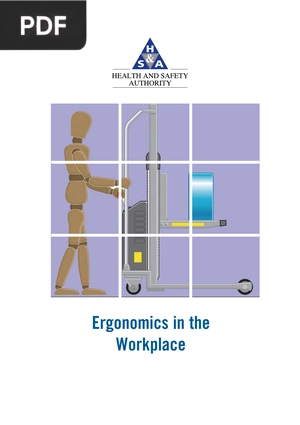
A concise introduction to ergonomic principles at work: posture, sitting and standing, lifting, pushing and pulling, plus noise, lighting and temperature. Includes a reading list for going further.
Detailed guidance on assessing and reducing the risk of injury from lifting, carrying, pushing and pulling, with risk filters, assessment checklists and examples of good handling technique.
How to assess and prevent pain and injury in the neck, shoulders, arms, wrists and hands caused by repetitive work, with a risk assessment worksheet, case studies and advice on managing affected workers.
A hands-on booklet of low-cost tools and work methods that reduce back strain and repetitive stress in farm work, from harvest carts to lighter containers. Each solution includes how it works and what it costs.
National Institute for Occupational Safety and Health
Human factors is ergonomics applied to whole systems, from aircraft maintenance to spacecraft. These NASA and FAA handbooks explain human error, workload, and how to design for real people.
A comprehensive human factors reference covering human error, fatigue, workplace design, documentation, training and safety culture. One of the most complete free handbooks on applying human factors in high-risk work.
A concise manual on building a human factors program step by step: error reporting, fatigue management, procedures, training and measuring results. Written with industry and academic experts.
A classic introduction to human factors at work that explains why people make errors and break rules, and how job design, organization and culture can prevent them. Includes real case studies.
The joint IEA and ILO framework for designing work systems around people, setting out the core principles of human factors and ergonomics and how to apply them in organizations of any size.
International Ergonomics Association and International Labour Organization
A full-color chapter on how fatigue, stress, complacency and communication affect technicians, with the famous "Dirty Dozen" causes of human error and practical ways to avoid them.
A massive reference on designing systems for the human body and mind, covering anthropometry, biomechanics, cognition, workload, displays, controls and habitability. Essential for engineers and designers.
Send this page to someone who’d love to read it. Everything is free, no sign-up needed.
Esc
Start typing to search...
Searching...
No results found
Try different search terms
Your book is downloading!
If InfoBooks helped you, you can support us in one click: add us as a preferred source on Google. You'll see more of our books when you search, and you'll help us keep sharing free reading with everyone.
Done! Your book is downloading
Know someone who’d enjoy reading it? Send them this page. It’s free, no sign-up needed, and you help us spread the love of reading.